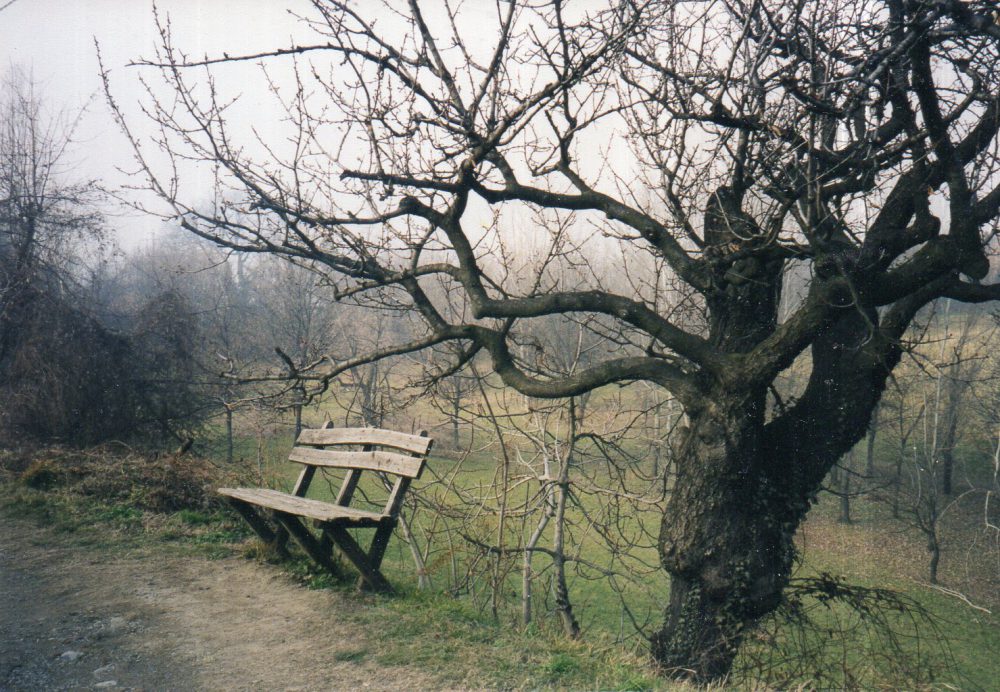
Self Respect Helps Us Gain Happiness and Inner Peace.

20180829_105011

A friend of mine recently shared this quote from her late father: “I do not count how far I walk, but the time I spend when walking.” To me this demonstrates a wonderful sense of self-respect. Self-respect can be tricky to acquire. It grows when others say kind words, yet if I feel lacking or insufficient, I will not accept nor believe others when they compliment or praise me. With a greater sense of comfort within myself, I can more easily accept others kudos. It also helps greatly when I am not looking through a veil of worry, guilt, or wanting to please. It takes time to recognize and then dissolve that veil.

Small children have a natural sense of self-respect. They may begin to lose it if they do not get good feedback from the adults around them. On the other hand, with too much praise they can become overly egoic, which is why parents have for ages been chary with or even withheld praise. This attitude of disparagement was practiced for generations by well meaning parents. For example, when I proudly played my mother a song I had just learned on my newly acquired guitar, she responded: “That’s nice, now when will you begin to write your own.”

Fortunately I was used to this kind of ‘praise’ and did not take it to heart. My mother meant well. She was only imitating her parents’ behavior. I tried hard not to act this way with my children. It isn’t easy being a parent. Good or bad, the examples from our own upbringing are hard wired into our consciousness. My mother struggled all her life with almost crippling sense of self consciousness brought about by her stern upbringing. I had to unlearn much of what she had demonstrated to me, and in the process I discovered the essence of respect for others: detachment from rigid ideas concerning how I think others ought to appear or behave.

One day my two girls were small and we were out with a neighbor and her children. She looked at her watch: “We must get back or the children will miss their programs.” I was taken aback. I never thought that children might have a special desire that would transcend parental priorities. I was raised in a time when children had hardly any say in what they did or when they did it. Light dawned and I incorporated this new attitude into my child rearing.

As time went on, I perceived another negative aspect of myself. I noticed how unkindly I reacted to the perceived failures of others. I began to work to develop a stronger sense of compassion as well as respect for the effort rather than criticism of the result. What I have learned is that when I am comfortable with my own sense of self-respect I can see more clearly the results of my actions; I am not looking through a veil of worry, guilt, or wanting to please. I have also recognized how important it is to feel compassion for myself as well as for others, and this is an important aspect of my ongoing learning process.

Keys to Patience

20180828_145205There is a joke I remember hearing some time ago to the effect that when a minister repeatedly prayed to God for patience, God sent him an incompetent secretary. He ought to have known better. Patience training is best experienced when I am in situations requiring patience. How else can I learn? There is no other way I know of.
Motherhood is good for learning to be patient. Certainly patience is needed when caring for small children. They take their time, as they need to do. I still vividly recall my walks with toddlers when they were small. Once they refused to stay in the stroller, I had to move at their pace because there was no way they could walk faster than their short legs could carry them.

Those days are long over. Now it is my turn. I need to walk more slowly because no matter how much I would like them to, my legs simply do not move with the speed they used to. I remember how fast I used to walk at one time. I was even proud of it. When did I begin to slow down? Age creeps up on us when we are not expecting it.

There are lots of books on what to expect when you are expecting a child or when one is born and you need to cope. Someone needs to write a book on what to expect as you age. Perhaps it could be titled Aging for Dummies. There is much more to aging than physically slowing down. While I work at being patient with myself in various situations, it is not easy.

Of course we all age differently. Still, it might be useful to know more about what can happen to the body not to mention the mind. Most of my relatives aged well. That is to say they were vigorous and active while they lived. However, I have passed the age they were they left this life, and I do not remember them ever mentioning how they felt as age advanced upon them.

Because at the time I wasn’t thinking about aging, It did not occur to me to ask them. When we are young or even middle aged, the country of old age is a foreign place. How it feels and how it causes us to act are mysteries we cannot plumb without experiencing aging for ourselves. Still it might be nice to have some guidance. Patience is a high priority.

At least I can contribute things I have learned that may help. Depending on how much patience I have time passes either quickly or slowly. So rather than focus on how I dislike waiting, if I observe my surroundings, it is easier to be patient. I also recognize that the more patience I have with myself the easier it is to be patient with others. One of the secrets to achieving patience is distraction. Another is respect. That respect is usually linked with compassion, something that seems to have come with age and as I have worked for it. When I respect my limitations or those of another, patience comes easy. Above all else what really matters is one simple thing: practice, and aging gives me plenty of that.

Benefits and Liabilities of Aging

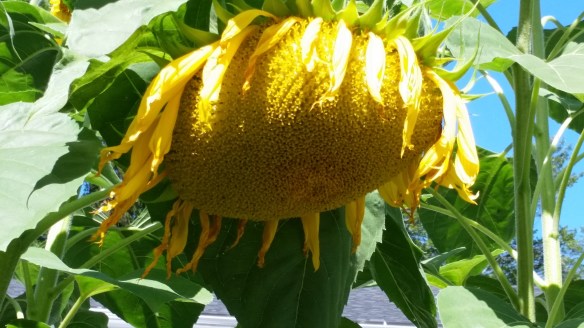
Sunfloer bowed downWhen I was little my grandmother used to take me with her to visit her friends. Among them were two sisters who had never married but lived together in a pretty home with a nice porch. They used to give me cookies and cambric tea–milk, sugar and a wisp of tea in a delicate china cup. My own mother was physically strong and after my father passed on lived alone and drove herself between Florida and Maine even in her eighties.

These and many elders of my early years presented an image of healthy, hearty behavior. My grandmother used to do fancy dives into the swimming pool of the beach club she occasionally took me to. My great aunt played golf and tennis and had silver cups to show for it. I had teachers with white hair who were wise and good natured. My life has brought me many examples of vital elders who carried on their lives energetically.

Just recently I attended a small reunion for my high school classmates. I was impressed with their fortitude and vigor. As we visited together I enjoyed renewing my acquaintance with theses women with whom in our teens I had shared time, space, and teachers. It was quite special to be with my contemporaries. I found that even after all these years we still had much in common besides our age and the school we had attended.

The life paths we had taken had varied widely, yet we all shared a dedication to improving the world and being of help when needed. Born when we were, we had grown up with different mores and rules of behavior than those of today. As a result we have had to make many adjustments. When people do not grow with the changes that accumulate around them, they become bitter and crabby. It seemed to me that none of us had.

No doubt we all had our share of aches, pains and limitations. At our age some of that is to be expected. However I didn’t hear anyone complain about their health even though one of us used a walker and another had both vision and auditory issues of a serious nature. One of the blessings of age can be the ability to deal creatively with one’s limitations. Patience can come more easily when one has lived a long time.

The benefits of accumulated years are a kind of grace that can make up for the increasing changes that as we age limit activities, not to mention movement. Speaking for myself, I would say that patience tops the list of these benefits—not only patience with others but also patience with myself. In addition, being able to wait out a difficulty, the knowledge that time helps heal as well as facilitate, and the ability to listen to and soothe those who live with greater immediacy and impatience are some of the benefits I cherish as I grow on in years.

Being of a Saving Nature

Kathy's Kitchen BasketsYankee thrift originated long before the pilgrims arrived on these shores. Being of a saving nature is a key to survival in tough times no matter when or where they occur. In today’s opulent, throwaway society times thrifty behavior isn’t very fashionable, however, I am happy to practice my version of it. My mother, though not a Yankee, certainly was a great example of that kind of behavior. I try to emulate her, though I do not go to the extremes she did.
For example, the presence of my mother’s linen sheets from her wedding trousseau, still tied with their original pink satin ribbons was an intriguing mystery, first in her cedar trunk and then later when the house got added onto, the hallway linen closet. They had never been used and apparently were not supposed to be. My father used to say jokingly that she was saving them for her next husband. I never got an explanation about them from her.

In the same cedar chest in her bedroom at the foot of her bed she also kept a costume she had worn for some classes in Spanish dance. The exotic, colorful skirt and top, sprinkled with bangles, fascinated me. In one of her dressing table drawers she kept a wonderful collection of small, decorative evening purses she seldom used. I loved looking at them. My father would tease her about the several little cardboard bureaus in which she kept an assortment of things. She seldom if ever threw anything away.

My mother trod a fine line between saving and hoarding. I once was helping her tidy up the contents of a closet in their summer home. As we emptied it I teased her about the number of toasters and irons she had stowed away there. She informed me rather sternly that she had bought them at yard sales and was keeping them in case the one she was using failed to work. Her behavior may have been a result of her World War I childhood in Germany.

If you define hoarding as holding onto useless items for some reason that seems logical to the hoarder, she might be said to be one. When I visited her in Florida, after my dad had passed on she had a plethora of small shampoo and conditioner bottles from her travels with him lining her washbasin, along with empty cardboard toilet paper rolls stacked by the toilet. She never explained why she kept them.

I did inherit some of her saving nature. However my version of it is tied to what will prove useful in the future. I save leftovers and seldom have to throw them away because they combine nicely to make new meals. Small boxes that are good to hold gifts, padded envelopes that can be used again, tissue and wrapping paper, and more jostle one another for room in my hallway. When Christmas comes, or the birthdays of dear ones I don’t need to go to the store for packaging. However, I differ from my mother in one significant way: When my collections impede progress in the hall, I recycle to our local thrift store.

Don’t Shoot the Messenger, Pay attention to the Message

1-8-17-first-bird


I well remember trips as a young child to the A&P. The smells of the small supermarket in our town intrigued me. The fresh food in bins from which my mother would carefully select her vegetables and fruits gleamed with an allure that reflected my curiosity. In addition, the workings of the body have always interested me. As a child I used to mix up the medicines in my parents’ bathroom cabinet and feed them to my teddy bears. Beginning with my childhood I have had a lifelong fascination with food in general, our needs for it, and how we nourish ourselves or don’t, depending on what we eat and how.

So many of the ads I see on TV are for medicine, both prescription and over the counter. It makes me wonder if we are all really that ill or in need of fixing? Perhaps we are, yet I wonder too whether if instead of trying to alleviate symptoms with medicine, we might do better were we to pay more attention to how and why the symptoms have arisen we might do better were we to pay more attention to how and why they have arisen. I am speaking about digestive issues in particular, though others are equally as important.

Of course there are serious illnesses that require intervention and the use of various prescribed medicines. However there are other conditions that will respond well to changes in lifestyle and most especially to changes in dietary habits. I well remember how when I was only in my forties, someone a decade older told me how important it had been for her to reduce food intake as she aged. She told me she got by on two meals a day. Different people will do better with different plans, however reducing intake is key to helping us be healthier.

The symptoms of the acid reflux so many experience are often a result of overeating, eating foods we do not digest well, or eating poor food combinations. As we age, the production of our digestive enzymes diminishes. Many comfort foods we once enjoyed become at best indigestible or at worst dangerous to our health. Yet many of us continue to eat as though we were in our twenties and still growing. While trends in eating come and go, for instance (carbohydrates good, fats bad now reversed), one truth remains: what and how we eat are irrevocably connected to our physical, mental and emotional health and well-being, not to mention our weight.

What can we do? Chewing is vital. Busy with our lives and impatient of meals perceived as mere interruptions in our busy lives, many of us swallow food half chewed, washing it down with liquid. This does not allow for the incorporation of digestive enzymes, not to mention roiling the stomach with acid from feelings of haste. Instead we could slow down and taste the food as we chew. TV ads counsel taking this or that medicine. By so doing we are effectively killing the messenger: the symptoms that tell us we are doing something harmful to ourselves. When we pay attention to the message we can learn how better to treat our bodies and prolong our good health.

Keeping the Peace without Sacrifice

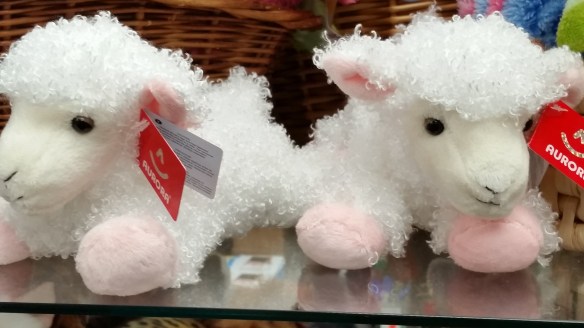
toys, 2 lambs It was the custom in my family when I was growing up to invite a non family member to the holiday dinners held at the home of my grandmother or my Great Aunt Alice, so that there wouldn’t be any “rows” as they were called…what could be termed family arguments. People were more likely to be on their best behavior with a relative stranger or at least a distant relative in their midst. The family I grew up in was rather vociferous.
My parents tended to discuss their differences at the top of their lungs. Their shouting made me cringe. They must have grown up doing this. My father and his mother my grandmother, used to have loud disagreements. My mother once told me they would telephone each other, call and then hurry to be the first to bang down the phone. My mother also talked about the “fights” she had with her sister; she too grew up in the habit of loud disagreement. Disliking my discomfort, I resolved when I grew up there would be no fighting in my family.

When neighborhood children played in my yard, they knew if they provoked conflict they would be sent home. If my children were to begin fighting I would separate them and send them to their rooms. In addition, if I strongly disagreed with something their father wanted or said, I would wait until they were out of earshot before I discussed it with him. I had determined there would only be peace throughout my entire household. No one was permitted to fight.

There is one problem with doing away with conflict entirely: any resentment or unhappiness can linger and come out in sneaky ways, like cutting or sarcastic remarks or other hurtful behavior. Even today I have to watch myself if I haven’t expressed my personal upset. I am liable to say something mean or unkind and call it a joke when it really is not.

However, in those days I didn’t know how conflict could be resolved while taking people’s feelings into account. I have since learned about conflict resolution and about ways to carry on discussions in a reasonable fashion. The “talking stick” method means one person gets to speak without interruption while holding a talking talisman. When he or she is done, the next person holds it and has his or her say. Even young children can learn to abide by this method.

Keeping the peace does not mean keeping silent, it does mean expressing oneself without being judgmental or vindictive. Feelings can be expressed and people can agree to disagree. What is important is to learn how to express negative feelings responsibly. I can say, “I feel,” not “you make me feel.” When I take responsibility for how I feel, others can do the same. When I speak my truth with kindness, I evoke the same response. When everyone listens, resolutions can be arrived at and peace can be made without anger, resentment or the sacrifice of anyone’s well being.

Birthdays are Milestones to Celebrate

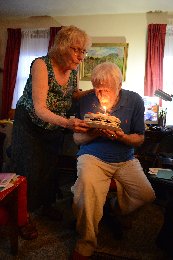
Stephen and Tasha bday 2        When I was a child there was a game called musical chairs that was often played at birthday parties. Enough chairs minus one, to represent the number of children present were placed in one or two rows and as a tune was played on the phonograph, participants marched or scurried around them. When the music stopped you had to find a seat. One chair was removed each time until by the end the winner was the person who sat in the remaining chair. I disliked the game intensely. I wasn’t an aggressive child and often lost out early. I hope it has fallen out of fashion. We never played it when my children were growing up.

When the games are enjoyable, birthday parties can be lots of fun. Our country is about to celebrate another birthday and so is my husband Stephen. His mother didn’t quite make it to the 4th so his is the 3rd. We always have a party and invite friends to come share in our celebration. In addition we usually take the entire week off. We avoid housework except for what is truly necessary like laundry, cooking and shopping. We also take the week as a time to get away from ongoing writing projects and seek out things to do for fun. Occasionally we go to movies or interesting restaurants, sometimes we revisit places we’ve lived and take a walk together down memory lane;.

The birthday of our country is a grand occasion throughout the United States, with concerts, fireworks, and gatherings as well as parades. I lived once in a town that had a big parade every 4th and every year to my family’s delight it marched down our street and past our door. We were able to sit on our front lawn in folding chairs and watch the marchers, the bands and the floats pass by. Later in the day that same town also later held games and races for the children, and there would often be a carnival to enliven the festivities as well.

Called Independence Day, the birthday of the USA was first celebrated on July 4 1777 in Philadelphia with bells, bonfires and fireworks. The glorious 4th is also an occasion for political speeches and posturing as various politicians seek to gather votes and voters with an eye to the elections in the fall. Orations by Daniel Webster, john Quincy Adams and many others throughout our history have enlivened the day. I can remember picnics by the beach and local politicians enlivening the air with their promises and/or excuses.

Celebrating birthdays whether one’s own or that of someone else is fun. It’s important to mark the milestones in one’s life with special emphasis. The older we get, the longer we live and the greater the achievement in doing so. However if I don’t take care of myself on the way to my milestones, once they have accumulated I may regret it if my health has deteriorated. It’s important that Stephen and I get enough exercise, eat foods that are healthy and nourishing, and make sure we have enough sleep. That way we really have something to celebrate every year when our birthdays come around.

The Importance of Cherishing Myself

Tasha full f aceOn the rare occasions when I have been without anyone to cook for except myself I found that I had very little interest in making my own meals. While I truly love to cook for my friends and my family, in my experience, it brings me been little to no pleasure to cook just for me. Lately, I haven’t had to deal with that problem, and while I hope I won’t have to in the future, if I do, I will try to think differently. This attitude may be why most if not all of the retirement and assisted living communities have food plans included in their fees, as well as dining rooms that serve up to three meals a day.

For most of us cherishing ourselves is not easy. It’s not something that comes naturally, and there’s a reason for that. While because they don’t know much about being an individual, very young children are naturally unselfish, once they learn to think of themselves as “me” most of their parents begin teaching them to share. “Sharing is caring” becomes a kind of guidance with which to approach both giving and doing. This is all very well until we begin to leave ourselves out of the sharing equation. It is vital to remember ourselves when we share. I am happier and more content when I include myself in my decisions and actions concerning others.

What can make us forget to do that is that often it feels better to give than to receive. Giving can even make us feel a bit superior to the recipient, a kind of pat on the head. It can also incline us to wish to be thanked or even to be given back to in some way. If or when we do not get a return on our gift, we may grow resentful. This then can create a feeling of martyrdom or even bitterness as in: “I did thus and such for them and got nothing back,” or “Look what I gave them and what did they give me?!”

If we cherish others at our own expense and forget to cherish ourselves, we do both the recipient and ourselves a disservice. It is not difficult to think of ways to cherish ourselves. However given that it may feel more virtuous to focus on others, it may also be easier to do so. Yet small acts on our own behalf can make a big difference. For instance: remembering to buy and prepare a kind of tea I like along with the one that Stephen prefers starts my morning happily. Remembering to ask him to join me in doing tasks or walking enhances my day.

My own small acts of kindness to myself, like taking the time to sit with my feet up and read a fun book for at least an hour a day, or occasionally stopping what I am doing and going out on the porch for a breath of fresh air make me feel good. I also appreciate it when I remember to do a bit of stretching or some exercise. When I discover a new pair of socks at my favorite online provider, or a pretty but unnecessary item of clothing in our local thrift store, I no longer feel guilty giving this to myself. Sharing means giving equally, not depriving oneself. If I encounter any guilt when I do something for me, I remind myself that I deserve to be cherished, and I smile and tell myself, “I love you too.”

The Many Ways of Cherishing, Part One

Dad with Snake Dictionary definitions of “cherish” tell us it comes from words that imply caring and holding dear. The French word “cher,” or “cherie” meaning dear one is often used as a term of endearment, especially in Europe. That and those we cherish are what and whom we hold in our hearts as precious. Keeping, implying more than just a momentary affection, is another dictionary definition of cherishing. I was thinking of this as I contemplated Father’s Day and the memories I cherish of my late dad.
I fondly remember our many sand castles we built on the beach over the years. On occasional weekends would go to my Great Aunt Alice’s beach cottage so he could get away from the incessant telephone calls from clients who thought they were having horticultural emergencies. No cell phones disturbed our peace, nor was there even a landline to the simple, somewhat primitive beach shack our family slept in. Our daylight hours were spent on the sand, in the water or weeding the beach grass from the path to it. He considered that his way of repaying his aunt for her kindness in lending us the cottage.

If there were big waves left over from a storm in the days before we delighted in jumping hem together. Standing waist deep in the water he would hold tight to my hands and I would leap as high as i could with him, while the waves battered at us before they threw themselves onto the beach. He would call us “brave girl” and “brave boy” as we waited for the next one to crest around us. The exhilaration of it is vivid in my mind even today.

This and other cherished images from my young years are fun to dwell on. I keep them in my heart, along with those of other dear ones, some of who have departed this life and others of whom live at a distance, whom I seldom see. I also think about and spend time caring for friends and family nearby. I do my best to keep in touch and make sure we stay current with one another’s lives. I do this with email or phone calls, or even texts nowadays. The many forms of communication are a great help to me in my efforts

However, in my attempts to cherish I have learned that not everyone looks at life in the same way. For instance as in the tale of the monkey who fearing it would drown, so kindly put a fish into a tree, I try not offer help just because I think it is needed. I also must be mindful not to impose my values on a loved one who may have a perspective differing from mine. Most important, I must make sure think before I speak to hear what I am about to say and make sure that my words come across as loving. Sarcasm has never served me well, nor have clever comments or observations that may unintentionally wound. Cherishing takes many forms; being mindful is an important one


I love to hear from readers and I do cherish each and every one of you.

Flowers of Remembrance

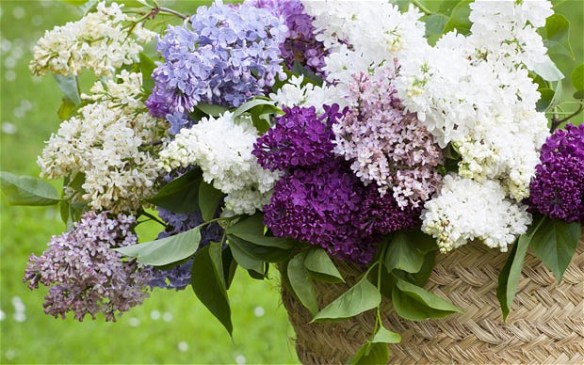
lilacs_2582962b

In the town where my grandfather who fought and died in WWI lived, there is a square dedicated to his name. When I was a child my father took me every year to the Memorial Day parade there. It would stop at his sign and someone would place a wreath on it. Then we would add a big bouquet of carnations. Someone from our family would bring them, and I can remember being held up to put the flowers in. This is the 100th anniversary of its original dedication, and my brother will be there to do the family honors.

I remember as a child wearing my big straw hat with the ribbon hat hung down the back, watching the band march by with the big drum that boomed so, and the brasses playing a marching tune. Later I brought my own children for the event. One daughter would cover her ears, the booming and shrieking of the drums and brass being too much for her. After the square was decorated, we would walk with the parade down to the beach where flowers were thrown into the water and the band would play “For those in peril on the sea.”

Memorial day was originally established with flowers. At the end of the Civil War the women who were placing flowers on the graves of those fallen at the battle of Shiloh wished not to distinguish between Union and Confederate. The thought was to honor those who died, regardless of their affiliation. In the years since, many traditions have grown up around Memorial Day in the US, with flowers and wreaths remaining the most notable symbols of remembrance.

Once as I was out walking in a neighborhood with many Christmas wreaths decorating the doors, a man came up to me and in a British accent, asked me about them. “In England we put a wreath on the door when people have died,” he said. I chuckled and said no, no one had died here; these were Christmas wreaths. I told him it was customary to lay wreaths on graves in the US however, first displaying them at the funeral itself.

A search on the Internet will reveal much information concerning wreaths and their uses, as well as flowers. Once when I was in charge of purchasing and arranging the flowers to decorate my daughter’s wedding celebration, I bought a variety of blossoms, chrysanthemums among them. My daughter’s husband was Italian and announced that chrysanthemums were only for funerals. I removed them and my bouquets were significantly diminished.

In Italy laurel wreaths are given to graduates of advanced degrees; they are a sign of victory. This goes back to the early Greeks and Romans who used them that way. All over the world flowers too are often given to the graduates, and as well to actors and performers of all kinds at the conclusion of a performance. While they are ephemeral and fade quickly, the flowers we use to honor both the fallen and the victorious are a precious reminder of how important it is to take note of our achievements great or small.