Spring is a Time for Awakening

Maple ree flowers and leaves 1Though I am fonder of some than of others, for me every season has its unique blessings. Autumn has always been a favorite of mine because I like the crispness of the air and the vivid colors that paint the scenery. However, the cycle of the seasons produces different feelings in everyone and we all have our favorites. It may be that as a poet I am more sensitive to or pay more attention to the change of the seasons because I feel it so keenly. Winter for me is a time for rest and often for extra sleep. The dark hours encourage it. During the winter, like the bare branched trees and the hibernating creatures, I am less active and more inclined to quieter occupations.

It’s easy to sleep late in the winter. The light does not come through the curtains until morning is well advanced. Chilly weather does not encourage leaving warm covers for frigid floors. Yet as the light hours grow longer and the dark ones shorter, the day calls to me sooner and sooner. Reluctant as I may be to get up from my bed, it becomes less alluring to linger than to rise into the day. Even as the trees and the birds greet the brightening weeks, with the spring, something in me begins to wake up.

Winter encourages me to make soups and stews. My pantry and refrigerator are stocked with warming foods. With the advance of spring I think more about salads and lighter meals. I toss the cold weather recipes that I have accumulated yet not found time to make and clip out more recent ones geared to fresher, less sturdy meal components. Now that I can see it, when I look around at the winter dust on shelves and surfaces, I feel more diligent about eliminating it. Somehow when I can’t see it, it is so much easier to ignore. Now it no longer is.

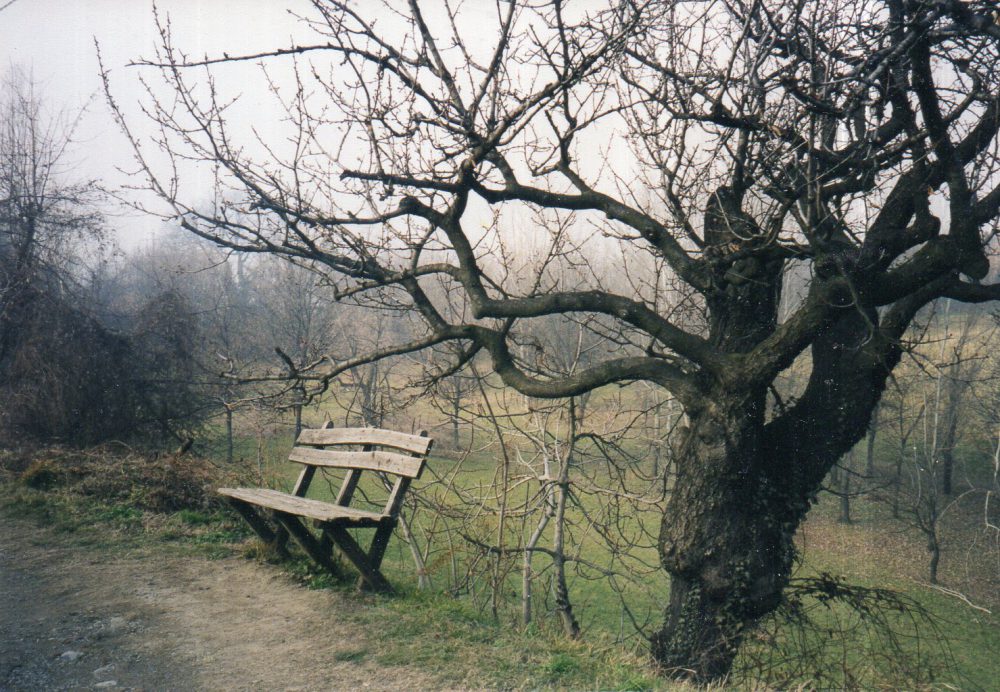
When I was out and about, my eyes had become accustomed to bare trees sleeping in the cold. All winter I admired the still shapes of the bare branches against the sky. Now as the trees blossom and leaf out, they seem to be dancing with joy. The spring breezes flutter the trees’ new emerging clothing as they dress themselves in their fresh spring wardrobes. When I go about my errands, my heart sings along with the turning wheels of my car.

When I used visit my daughter in Italy, she would come into my room of a morning to waken me from my jet-lagged sleep. She would open the curtains and turn to me as I clung to my pillow. “Wakey, wakey,” she’d say with a smile. Finally I’d open my eyes and greet the day, glad to be awake and alive, ready for a new adventure. Spring feels like that. It is time to pursue the new, the untried, the innovative. Time to put away the darker, heavier winter clothes and put on light, bright colors and fabrics, to free the feet of boots and don sandals. Time to awaken to the new season and to rejoice in it.

Befriending Ourselves

Bridge reflected

For the most part very young children are naturally generous. This may be because they do not yet have a strong sense of individuality or perhaps because they feel others will enjoy what they find tasty or enjoyable, whether a cookie or a cherished plaything. Later on they lose this openheartedness and fight to keep what they believe is theirs. At this point most parents teach them to be polite and sharing. This lesson becomes a kind of inner imperative that guides us as adults. We learn to feel better when we obey this inner morality and as a consequence often end up depriving ourselves in favor of giving to others.

When was the last time you bought yourself a present—not something practical but something you wanted and didn’t think you ought to spend the money for? You might even have recently bought a gift for someone else that you would have liked to give yourself, and yet didn’t quite dare to for fear of your own disapproval. Most of us have been taught to think of others before thinking of ourselves. While that is a nice way to behave it often leaves results in making us feel deprived or at least somewhat resentful.

Giving to others is praiseworthy. Depriving ourselves to give to others is not. It often results in our feeling the other person ought to be more grateful than they may be…especially if the other does not know how you sacrificed to do that. The reason we too often give to others at our own expense is that it feels nicer to do for others. It gives us good feelings because we’re acting in accordance with what we feel is the right thing to do. But is it? I believe it is important or even necessary to treat ourselves as we would a friend.

Long ago I met and studied with a teacher that taught me about this. It was the beginning of a friendship between myself and me. I learned that if I listened to a wee small voice inside me I would receive true guidance toward correct behavior when it came to giving to or acting for myself. I am not speaking of being selfish or self-centered. There is a big difference between befriending oneself and spoiling oneself. I do not believe in self indulgence to a point of neglecting others, only in being fair about the balance between giving to others and giving to myself.

The real key here is that balance. I can tell when things get out of balance because that inner voice will cry out in pain or sorrow. I may feel neglected or ignored even when I am actually not. Learning to hear that inner voice requires giving up the righteous feelings I get from self-sacrifice and instead asking myself what I really want to have or do instead. I can ask myself if is this how I would treat a friend? The answer comes as a knowing or an understanding. Then my actions are guided by what is good for all concerned including me. When I am my own friend I treat myself the best way I can, and I am happy and content.

The Preciousness of Remembering

When I was a child Little Tasha 4and death or even disaster was to be spoken of, someone would say, “Not in front of the children.” The subject would be changed or I would be told to go off and play so the adults could continue their discussion. Yet because we had animals, death and change were part of my life. I witnessed the drowning of baby ducks and the demise of baby chicks. It was hard when a dog got into my pet rabbits’ pen and maimed them. My aunt’s gardener had to–as I was told, “put them out of their suffering.” Death was no stranger to my childhood. I am neither uncomfortable with it nor afraid of it.

Still, it does have an effect. The recent passing of a dear friend has brought a sense of immediacy to my relationships, and prompted a renewed sense of attention to my way of thinking about life. She and I used to speak each morning except Sundays. More than once I said to Stephen, “One day the phone will not ring at 9:30 every day.” Then indeed that day did come. While I miss my friend, I know she is in a much more comfortable and happy place than she has been for some time. Though I do miss her calls I also rejoice for her.

I am happy to have pleasant memories of our time together. That is the saving grace of partings. It is also a reminder to focus when I am with a dear one and to be present in order to have something to remember. More and more as I get older I have come to realize that endings come whether we want them to or not. We have no way of knowing whether or not any given conversation, meeting or interaction with another may be our last. I do not say this because I have a morbid fear of endings but rather as a reminder that any time we spend with another may be significant.

When we are children we have no understanding of how it is that things change or perhaps end. That ignorance may even be important to children’s comfort and sense of security. Most adults grow accustomed to change and learn to flow with it. It may be an aspect of maturity in human beings to be able to do that. In my life there have been many changes I could never have anticipated. Being able to adapt to them has been crucial to my happiness. Developing a sense of detachment to an anticipated condition of permanence has been not only valuable but also essential.

When I was a child, I could buy an ice cream cone for a nickel. Now even the smallest one costs 50 times that. The decor in my parents’ living room changed once in my memory. Today many people redecorate frequently. Then divorce was rare, people stayed at the same job for most of their lives, I could go on and on about how it used to be. My point is that change is more than ever a constant in most lives. For our comfort it is important to be able to deal with all forms of change, whether of décor or of circumstances. When I make the time to focus my attention and to appreciate what is happening, whether with a relationship or an experience, I have much less regret when it ends.

We Need Both Darkness and Light

Shadow fenceWhen I first learned to read I fell in love with the printed word. After that I devoured as many books as I could get my hands on. Like many children, once in bed at night after I was supposed to be sleeping, I hid under the covers and read by flashlight. If I woke up ahead of my parents as I often did, I did, I pulled up my shade for more light, or perhaps again used my flashlight. Reading wherever I was every chance I got, I accumulated knowledge and stimulated my imagination giving me a rich childhood and a good basis for expansion as I grew older. I still love to read however I no longer use a flashlight under the covers nor do I fear the approaching footsteps of a parent suspicious of my eagerness to go to bed.
As I have grown older, darkness has taken on more of an impact for me. The dark winter hours mean I sleep more, which is enjoyable. However, nowadays I need more light to see by. With the onset of Daylight Saving and then the Equinox that is on its way, I will enjoy the longer hours of light. I appreciate being able to see more clearly later and later in the day. Yet were it not for the contrast of darkness or the shadows cast by the light, it would be more difficult for me to perceive the size, shape, and outlines of objects around me. Also, without the dark hours of winter the trees and perennials would not get the rest they need to rebirth themselves in the spring. As do I, nature needs both to function properly.

Darkness is as necessary to us as light. It is what helps us define and manage the world around us. Early in their development as we attempt to shield our children from making mistakes we teach them about right and wrong. Sometimes this is a tricky proposition. As one of my teachers used to say, there are no absolutes. We teach our children and young adults not to kill or cause harm or hurt to others. But then they join the armed services and find themselves given a gun to aim at someone who is called the enemy. So in that instance killing is right or so they are told now. Could that have something to do with why so many individuals return from combat with troubled minds?

The Equinox presents us with equal hours for day and night. After March 20th the days will be longer than the nights until the process reverses with the Solstice in June. Meanwhile the world around us will begin to wake up from its long winter sleep in the dark. Balance in all things and the achievement of that balance is one of the important goals of the universal natural process of growth and decay. In addition we too participate in this process as we learn and grow, shining the light of our understanding on the darkness of ignorance. It is the contrast between them together with our moral compass that guides us toward the wholeness that is made up of both sun and shadow, darkness and light.


Saying Goodbye to our Friend

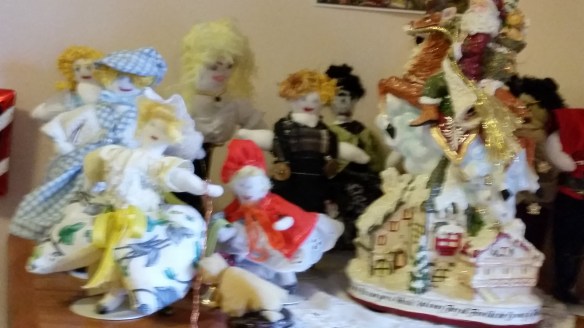
Laura Dodge's Dancing DollsAs we were moving into our Forest Lane apartment, we needed to assemble some of our new furniture. My tools had not yet made it over to our new home so I went knocking on my neighbors’ doors to see if I could borrow a hammer. Met with headshakes in the negative at each one I tried, I arrived at the last one. A spry older woman with a wonderful smile opened it. “Yes,” she said, “I have a hammer I can lend you.” That was approximately ten years ago and the beginning of a wonderful friendship with my neighbor Laura Dodge. I loved her spunk and her bright mind, but most of all I treasured her kind heart.

Over time as we visited and got to know one another, she told me her entertaining stories and shared her crafts with me. She also at my request shared space in her freezer with me. Over her protests I paid her “rent” in fruit sweetened jams and frozen desserts. She also had Stephen and me to tea and made popovers and other treats for us. I have recipes of hers in my collection that she wrote out in her tiny script. When she visited us in our apartment she admired my husband Stephen’s art. “Would you like to try collage?” he asked, and handed her a canvas. “Here, have fun.” She began to turn out wonderful collages of her own, asking for guidance from her teacher, as she called Stephen.

As her canvasses mounted and her skill increased, Stephen arranged for her to have art shows two years running at a restaurant in Worcester. Many came to her openings and admired and purchased her collages. We invited her to our birthday parties and she became popular with our friends. Everyone loved her stories. We included her in some of our shopping trips, took her to the Worcester Art Museum, and through a car wash, which she said was a first for her. When at Stephen’s suggestion she began to make dolls, we had fun helping her with designs. Eventually we loaned her a cabinet to keep them in.

When we met she was quite able physically, considering. As time went on and her physical health became worse, she couldn’t get out as much as she used to. Many of the evenings that she was home I would go down and visit with her. She had pain in her legs and in her back. At her request, I did some energy healing for her, singing to her and using my hands to remove painful energy and replace it with healing energy.

The day came when she could no longer live by herself. When she moved out we were both sad to part. We moved too very shortly, yet we kept in touch by telephone nearly every day. It was always a joy to hear the stories of her life and daily doings. Despite her many ailments and illnesses, she was so very filled with life. One of my favorite things she told me was, “It’s a small life, but I make it interesting.” Laura was an inspiration to me and to many others as well. I will miss her always.

Do you have a story to share with me or a suggestion for a column? I love hearing from readers. Send me an email at tashahal@gmail.com.

The Climate of Violence We Live In

Icy Branches

Growing up I read fairy tales featuring ogres and ferocious creatures, yet I knew they were not real. Besides the hero or heroine always won, often through trickery and clever alternatives to violence. I grew up protected from discussion of ugly or violent happenings. I’d hear, “Nicht fur das Kinder,” (not in front of the child) Then I would be sent away so the grownups could talk.

As a mother I brought up my children to work things out peacefully. There was no fighting allowed in our back yard or the combatants were sent home. Before TV and its depiction of worldwide conflict and violence, American children were not directly exposed to war and cruelty. Sadly, while there have always been violence, cruelty and destructiveness in our world, only recently has it been so blatantly displayed. Today’s youngsters will never remember a time of peace.

Watching the Olympic Games, I found it inspiring to see the athletes of today carrying on its tradition of peaceful competition rather than conflict between countries. Unfortunately, despite peaceful athletic competition, today’s youth is growing up in a climate of violence. Most newspapers feature that. Good news is often buried somewhere within the paper almost like a footnote. What has the acceptance of conflict as perhaps the only way to resolve issues done to young minds and hearts?

Yet it is not only the immediate media we encounter daily that contributes, there is also the tenor of our language. We speak of “fighting” bad conditions, disease, and what we dislike in the world. Killing is a casual term for stopping or eliminating: “kill” that article or image. The majority of video games seem to be about fighting and destruction. Comic books and illustrated novels have similar themes. When I was growing up there were curbs on the ugly and the dreadful. There was a comic code whose job it was to protect the young.

Now there seem to be no limits and no safeguards for young minds. When I was young we had bomb drills in our schools, yet the war was far away and no immediate threat. Today children have drills to rehearse for someone coming into the school and shooting them. How can this make them feel? A friend spoke of their child in college as being potentially unsafe in his school. No one ought to have to go through life feeling fearful, yet that is how things seem to be today.

Fear and anxiety separate us from one another. Love and acceptance bring us together. While no one person can make more than a small difference, whatever any of us can do to generate peaceful acceptance of each other’s differences and live in cooperation with each other contributes to a happier world. Where conflict resolution is taught in schools, violence greatly diminishes. Let us do what we can to encourage a climate of peace. Youth no longer bathed in violence will be free to see the world differently and react toward it accordingly.

I welcome your comments and/or questions.


The Many Kinds Of Love

Peace Village retreat 7eart cropped2Saint Valentine may or may not have actually existed. In fact, research reveals that there were not one but three Saint Valentines in all, with various details to their lives and deaths though all were martyred. The general information on the Internet indicates they were killed for performing marriages that had been forbidden by the Emperor Claudius the Cruel. It is also said that the Christian church took advantage of a popular pagan festival of that month, substituting the celebration of St. Valentine’s beheading.
Saint Valentine and Valentines’ Day aside, romantic love, while nice to have in one’s life is not necessarily the most satisfying. I recall how one day a dear friend was bemoaning his recent breakup with his former girlfriend. “Nobody loves me,” he mourned. “I love you,” I replied. “But you love everybody,” he retorted. I sighed and nodded. I had wanted to cheer him up. However he seemed determined to be sad. Many crave romantic love and are not comforted by the fact that they are loved in other ways

According to the Internet, the Sanskrit language has 96 words for love, ancient Persian has 80, Greek has three and we have only one. What a sad state of affairs! There are synonyms that express a loving feeling for someone or something: fondness, affection, adoration, and so on. Regardless, they do not adequately describe the love of a child for its parents, of the attachment many feel for their animal companions, or even of where they live. You probably would not say, “I am fond of my baby, my cat, or feel affection for my home,” you would usually say, “I love…”

The fact that we have no other word for it means that we apply the term “love” to many situations and individuals. We say we love this or that or them, yet we do not mean we have romantic feelings. Does this weaken the impact of the word? My friend’s dismay when I told him I loved him might indicate that the love I had for him was somehow not as desirable or as important as the love of his girlfriend. Yet my feelings for him were actually less tinged with judgment and more comprehensive than the ones he craved to hear from her.

Unconditional love or in Latin Caritas and in Greek Agape may be the most important of the kinds of love we can express for others or even for dwelling places or animals. That kind of love carries no criticism or parameters, no qualifiers or desire for any return. It is simply and purely love in its most beautiful form. When we are at our most loving is when we can give this love to others. It has the power to transform and to heal as well as to uplift. It is this love that the martyred St. Valentine back in the days of Rome portrays to us. Perhaps his love for others as he expressed it before he was executed might be seen as an example for us all.


The Discipline of Remembering

Garden Conversation042

I can clearly remember lying in my bed upstairs and wishing I was able to stay up and be part of whatever was happening. I also remember sitting at the table, a boiled egg or perhaps worse, a piece of liver before me—things I had no desire whatsoever to put in my mouth. If I wanted to leave the table I had to finish whatever I was given. One way I managed was to cut the liver into small pieces and swallow it whole. I can’t remember how I dealt with the egg.

My life as a child had lots of discipline in it. Authority figures held sway over my life. Often it was a parent: “Time to go to bed,” or a teacher: “Be sure to do your homework in a timely manner.” It never occurred to me that these disciplinarians were stand-ins for what comes when we are adults. In my innocence I thought discipline had to come from someone telling me what I had to do, not that one day I would need to tell myself.

Unfortunately for my childhood dreams, I need to enforce my own discipline in order to function in the world in an orderly manner. There is really no one that can do it for me. As a child I dreamed of the day I would be my own boss, as I thought of it then. I yearned for the day there would be no one to tell me I had to go to bed if I didn’t wish to, or make me eat something I didn’t wish to eat. Of course that is how a child thinks and the reality does not occur to us because as children we simply cannot conceive of it.

I remember thinking how grand it would be to be a grownup with no one to tell me what to do and when to do it. I could, I believed do whatever I wished, whenever I wished to do it. Children are so innocent. Little did I know then what I had to remember to do for myself when there were no more grownups to tell me and I was the grownup. As an adult I find discipline needs to be addressed often. For instance, there is the discipline of deadlines. If I wish I can ignore them though I do so to my peril. There is also the simple discipline of my body, which needs to sleep eat and go to the bathroom, occasionally at inconvenient times.

As I have grown older it seems to me there are more and more things I need to do each day in order to maintain my health and sanity. These require me to remember them as well as to do them. Lists help, yet were I to write everything I need to do daily down, it would be a lengthy list indeed. Practicing the discipline of remembering is perhaps the most important one of all, and in addition to doing my exercises and taking my vitamins, I practice this each and every day.

Intentions, Resolutions and Reminders

Dead Branches and reflections 2

Growing up I was somewhat clumsy and awkward. I was always tall for my age—I stopped growing at the age of twelve and was even taller than most of the boys in my class, who soon outgrew me. My parents also thought I was careless. I wasn’t really, just lacking in experience. I also had poor proprioception. That word defines an actual sense: awareness of where one is in space and how much effort is being put out. I once embarrassed myself dreadfully when my best friend’s mother asked me to help her set the table, by pulling it completely out of the sideboard and dumping its contents on the floor.

While I outgrew the awkwardness and with the aid of yoga even became quite graceful, I still struggle with the proprioception. However I found that mindfulness helps greatly with that. Centering myself, slowing down, and practicing deliberate awareness when I am moving around or even pouring water from a pitcher into a glass, is a must. Over the years I have tried to make this a habit, like washing my hands with frequency, especially lately.

The flu season has made it vital to remember to wash my hands each time I return home, especially when I’ve been touching things like Grocery cart handles, restroom doorknobs and even counters or tabletops. The other day in a restaurant a woman near us was coughing with frequency into her hand as well as into the air around her. We are told that washing hands well is more effective than using sanitizers and better for our health.

I learned this the hard way. Last week I picked up a germ that invaded my sinuses and hit my right eye causing me great pain and rendering me unable to read for any length of time. As a result I have strongly resolved to wash my hands carefully not only when using any restroom but especially immediately upon arriving home. I hope to avoid not only the flu, but any other germs.

Resolutions are better kept when we have a reminder to do so, and a deliberate intention is well bolstered by any negative experience that happens when we haven’t. Hand washing is now an imperative for me, and while I regret the suffering and pain of my illness, I am grateful for the positive reinforcement of my intentions. Powerful reminders are not always pleasant, however they certainly are useful. Making lists helps too. Without a list my intentions, let alone whatever I have resolved to do may be forgotten.

Getting older has its good and its bad aspects. Becoming wiser by virtue of experience is helpful. Becoming more mindful as a result of that experience helps greatly also. On the other hand, becoming forgetful is a nuisance. However, my lists do help considerably. The trick is to remember to write things down and then also to look at the list. When I was a young parent in order to stay on top of things I had to outwit my children. Now instead in order to stay awake and aware I have to outwit myself.

Making Priorities and Cheering Deadlines

Porch Icicles 3When my children were small it was easy for me to set priorities. First and foremost they were related to the needs involved in parenting. Children let you know when they must have something, whether it is changing, food or the toy they saw on TV. Sometimes they yell until they get it. Later on they can be more subtle yet any concerned parent can figure these things out sooner or later and if they do not they will find out eventually what is needed.

Now it is much more difficult for me to figure out my priorities, especially if there is not a deadline connected with the task. I looked up the definition of deadline. It is a printing term that was originally connected to the size and shape of the type the press was using. Anything that went beyond a certain limit was “dead.” Later the term was adopted by editors and related to time rather than type. I find deadlines to be very useful in forming priorities.

One of my New Year’s resolutions is to pay better attention to priorities. For instance, when something needs doing I need to do it in a timely manner and not put it off, only to discover that I have missed out or messed up in some way. One small example is coupons. They have dates on them; if I do not keep an eye on the dates they go by and the coupon is useless. No doubt many of my readers have the same issue.

I once read an article that suggested that when getting ready for a party one ought to put the most important things to do last because then they would surely get done. While is merit in that idea, and I have tried it for myself, what works for a party may not when it comes to everyday life. It’s been my experience that something I believed would take a certain amount of time actually took longer, and when I am working with a deadline that can be a problem to be dealt with.

On the other hand sometimes absent a deadline, it can be difficult to know what constitutes a priority. Vacuuming comes to mind, as does dusting. Of course if someone is coming over for a visit, cleaning and tidying become a priority. Then there is the email load. If I fail to answer an email sooner than later will there be a problem? It can be tricky to decide. Then there are the bills: Paying a bill involves a deadline and I hope not to put it somewhere I will forget about it and pass the deadline, thus accumulating interest or worse, a fine.

Nowadays I am thankful the Public Library sends out Internet reminders when a book is due. This is a great improvement on my having to remember the date it must be returned by. I can even look it up on line to do the renewal rather than make a phone call or perhaps drive to the library itself to do the renewal. The bottom line to my prioritizing is to rejoice for deadlines I have and make lists that will remind me to work on that which does not.