
The peach has wonderful mythic associations. It is a Chinese symbol of immortality, and it is often prominently displayed in depictions of the sage Lao Tzu. There is also a legend that a famous Chinese heroine Ho Hsien-Ku who lived in 7th century BC was transformed into a fairy by eating a supernatural peach. They said ever after that she lived on a diet of moonbeams and powdered mother-of-pearl.
According to Paul Beyerl in A Compendium of Herbal Magick, in Shinto legend, Iznagi, a primary male deity, visits the Underworld where he defeats demons pursuing him by throwing peaches from the land of Light and the Land of Darkness at them. Beyerl adds that the peach is considered by the Taoists to be a sacred food.
I have a lovely amethyst carved pendant from China termed a “peach stone.” According to The Magic in Food, by Scott Cunningham carved peach pits are given to Chinese children as amulets against death. Sprays of peach-blossoms are placed over the front door during the Chinese New Year to guard Chinese homes against negativity. Symbolically they bring the blessings of longevity or perhaps confer immortality. He also suggests that as they have been in China for centuries, with appropriate visualization, peaches may be eaten to induce health, happiness and wisdom.
Every Summer I buy my peaches from a nearby farm stand. The owner always has local ones, ripened on the tree in the sun. They taste like heaven to me, and I understand why they might be considered the fruit of immortality. When I feel ambitious, I buy more than I can eat right away, peel and cut them, add a few drops of lemon juice or a sprinkle or two of sugar, and put them in bags in the freezer so we can enjoy them during the winter.
Versatile peaches can be eaten raw or cooked, as a condiment with meat or chicken or as a sauce over muffins or plain cake. Peaches in cobblers or pies, jams, muffins or even peach shortcake are all wonderful ways to enjoy this delicious fruit. Personally I like them best ripe and unadorned with anything more than the sunlight that warms their lovely plumpness.
I can remember my mother putting them up in canning jars. She would pour sugar syrup over them, then lower them into a big kettle of boiling water. Stored in the basement pantry closet, how good those peaches tasted during the long winters of my childhood. They were such a treat, especially when they were served for Sunday dinner over vanilla ice cream
Try this simple peach sorbet. Fill a plastic baggie or pint container with peeled chunked peaches sprinkled with lemon juice or a bit of sugar. Freeze them until solidly frozen. Have ready a simple syrup using two cups of sugar to one cup of water, stirred until melted, cooled and refrigerated. To serve two combine 2 cups frozen peaches with ¼ cup simple syrup, and 1 Tbs lemon juice. Process until you have soft serve ice cream and serve right away.
 I remember my mother on a hot summer day wiping the sweat from her brow as she prepared the vegetables and fruit she canned for us to eat in the Winter. We lived on the property of my great aunt Alice whose gardener grew planted, harvested and shared lots of good food from her extensive garden. My mother was frugal and to her mind saving money in the winter was worth her efforts in the summer. In her mind nothing was ever to be wasted. While I feel the same way, I don’t have a garden to draw upon, however I do have a wonderful local farm stand that supplies me with fine food.
 On the rare occasions when I have been without anyone to cook for except myself I found that I had very little interest in making my own meals. While I truly love to cook for my friends and my family, in my experience, it brings me been little to no pleasure to cook just for me. Lately, I haven’t had to deal with that problem, and while I hope I won’t have to in the future, if I do, I will try to think differently. This attitude may be why most if not all of the retirement and assisted living communities have food plans included in their fees, as well as dining rooms that serve up to three meals a day.

 and death or even disaster was to be spoken of, someone would say, “Not in front of the children.” The subject would be changed or I would be told to go off and play so the adults could continue their discussion. Yet because we had animals, death and change were part of my life. I witnessed the drowning of baby ducks and the demise of baby chicks. It was hard when a dog got into my pet rabbits’ pen and maimed them. My aunt’s gardener had to–as I was told, “put them out of their suffering.” Death was no stranger to my childhood. I am neither uncomfortable with it nor afraid of it.
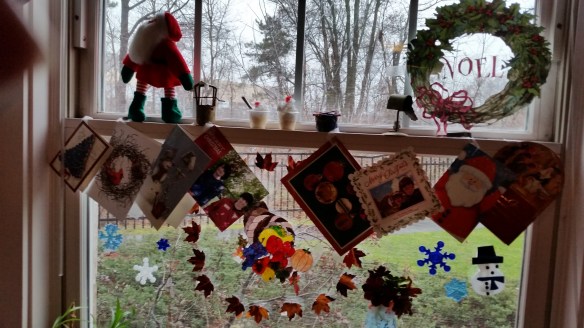 One of my fond Christmas memories is of my dad sitting by our living room fireplace wrapping and addressing his Christmas gifts to his workers and others with whom he had a working relationship. He was a horticulturalist and his company was on the North Shore where there were many fine estates and special gardens. He was good at designing views and helping the owners of the estates and their caretakers maintain their trees and shrubs.
 When I was growing up we usually said grace only at Thanksgiving, Christmas or on other very special occasions. I don’t remember any special discussion of gratitude in my family. God was often presented as a punitive figure, rather like my dad—as in or God will punish you for that, see if He doesn’t, and “Just wait until I tell your father what you did…” The church I grew up with emphasized being sorry for one’s sins and saying prayers for the protection and preservation of my family and myself. All that changed when I was in my mid thirties and I learned about the virtue of gratitude and its importance for a happy life.
 Mythology has fascinated me ever since I first encountered it in school. Until I discovered Joseph Campbell’s Hero with a Thousand Faces I was not conversant with much more of it than the Norse myths and those of Greece and Rome. I highly recommend this very special book to anyone who enjoys folk and fairy tale as well as learning more about the myths we all grew up with. The stories and tales of the heroes and heroines of yore are part of our cultural heritage and an important key to how we behave. Among the tales are also smaller, more prevalent myths embodied in our superstitions.
 Pujakins