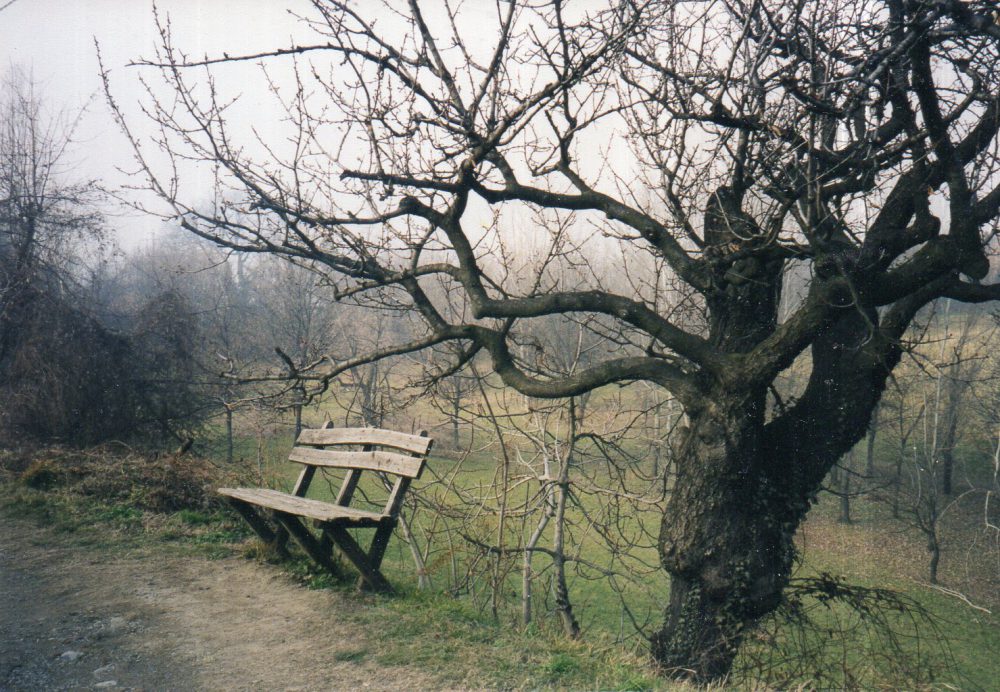
Heartwings says, “Where you put your focus is vital to your success.”
My mother used to tell me she enjoyed hanging out the laundry because when she finished doing so, she felt as though she had accomplished something. It gave her a feeling of satisfaction. At the time I was buried in tasks built around mothering my five very active, very creative children and was happy to have an electric dryer to do the work for me.
These days after many years of hanging the laundry out on the various clotheslines or racks in the different places I’ve lived, I again rely on a dryer, though for different reasons. Due to my Parkinson’s’, the time it takes me to accomplish anything has quadrupled, or nearly so, depending on the task.
I can’t do much about this. There is truth in that half humorous Pennsylvania Dutch saying, “The faster I go, the behinder I get.” In other words, when I try to hurry what I am doing, I make foolish errors or mess up in some way that delays me even more. Sometimes I feel like the adolescent with poor proprioception that I once was, who used to drop things, bump into them, or stumble over whatever got in my way. Nowadays there is a word for that condition, back then I was said to be clumsy.
Instead, I try to bring my attention to whatever I am attempting. It helps me when instead of allowing myself to be distracted, I focus on that and that alone. However, what I find to be the most useful are the small, daily chores I once hurried through in order to “get things done.”
I have made peace with tomorrow, recognizing that unless there is a hard and fast deadline, most things can be delayed without problems or harm. In addition, I get training in letting go of the ego satisfaction I used to derive from being efficient. The difficulty with ego satisfaction is that it’s distracting and not necessarily helpful.When I seek satisfaction as a goal, instead of a focus on accomplishing the task, it really does take away from my ability to function efficiently.
In trying to satisfy my ego, I’m not as able to pursue the best way to get something done. It’s easy to miss what works best when you are looking for what feels good to you. I’ve also noticed that these days, for many, faster seems to equate to better. No craftsperson worth her or his salt feels that way. I am reminded of the film The Karate Kid about the martial arts student whose teacher instructed him, “Wax on, wax off” as he worked on a car.
There is also the saying, “Chop wood, carry water,” a Buddhist perspective in reference to every day accomplishments. It’s all really about doing what is there to be done, the best way you can. Small tasks done with loving attention are as worthwhile as great accomplishments, however they are done.
May you find joy in whatever task you are pursuing.
Blessings and best regards, Tasha Halpert
P.S. Do you have any hints or helps along these lines? I can always use good ones, and I so enjoy hearing from readers. Reach out to me at Tashahal@gmail.com, and sign up for more Love Notes at https://tashasperspective.com/Pujakins.
 I used to chafe sometimes at my lists of things to do—sigh and say to myself, oh if I only had more free time to write poetry or organize, edit and tidy up my writings. It seemed to me that what I thought of as my daily or sometimes weekly drudgery took too much of my precious time and energy and I resented it. However, that was before the onset of the pandemic and the seeming disintegration of all that has constituted daily life and living, both personal and for my country.
 During most of history, people ate what they had put away for the winter in their cellars and barns. In Colonial New England, unless someone had a greenhouse a midwinter salad was unheard of. In the Middle Ages in Europe and Russia, fasting during Lent was a necessity because what little food was available to most by late winter had to be hoarded and used carefully. People ate with the seasons. Forty years ago on a late spring trip to Russia with my mother I recall cabbage being served to us daily. It keeps well if properly stored.
 Someone once said, “Point a finger at someone else and you will be pointing four at yourself.” That is what we do when we judge someone else. However this is exquisitely easy to do. In fact, most of us do it all the time. For instance, how many of us who need to lose a few pounds look at an overweight person and say silently, “How could he or she get so out of shape?” I know I used to be guilty of that. Now my thought is, “Oh that poor person, how difficult it must be for him or her.”
 My introduction to using a computer came abruptly. The son of a friend dropped one he had built on my desk and said, “Here you need this.” He left me without giving me any instructions beyond how to turn the machine on and off. This was back in the nineties when I still happily typed my columns on a typewriter and delivered them by hand. I imagine you can sympathize with how it was to try to apply what I knew about typing to this newfangled mechanical servant! Fortunately he did come back to teach me until I began to learn better how to manage. It certainly took patience—his and mine.
 It was the custom in my family when I was growing up to invite a non family member to the holiday dinners held at the home of my grandmother or my Great Aunt Alice, so that there wouldn’t be any “rows” as they were called…what could be termed family arguments. People were more likely to be on their best behavior with a relative stranger or at least a distant relative in their midst. The family I grew up in was rather vociferous.
 When I first learned to read I fell in love with the printed word. After that I devoured as many books as I could get my hands on. Like many children, once in bed at night after I was supposed to be sleeping, I hid under the covers and read by flashlight. If I woke up ahead of my parents as I often did, I did, I pulled up my shade for more light, or perhaps again used my flashlight. Reading wherever I was every chance I got, I accumulated knowledge and stimulated my imagination giving me a rich childhood and a good basis for expansion as I grew older. I still love to read however I no longer use a flashlight under the covers nor do I fear the approaching footsteps of a parent suspicious of my eagerness to go to bed.
 When my children were small it was easy for me to set priorities. First and foremost they were related to the needs involved in parenting. Children let you know when they must have something, whether it is changing, food or the toy they saw on TV. Sometimes they yell until they get it. Later on they can be more subtle yet any concerned parent can figure these things out sooner or later and if they do not they will find out eventually what is needed.
 When I was a child a friend of my mother’s gave me the dresses that that her twins had outgrown. Because they were dressed alike, I had to wear two of whatever came my way. In the days when I was growing up, thrift meant making do with what was available. Aside from the fact that while my family had enough, they weren’t exactly wealthy, there was a war on and many things, including clothing and shoes were rationed.
 Pujakins