
I remember a few of the Christmas gifts I received as a child. My favorite was a large brown teddy bear around two and a half feet tall I called Bruin. He became the head of my teddy bear family of five. Another was a wood burning set from my Great Aunt Alice. I never could figure out how to use it. One of my most memorable was a gift from my Uncle Oliver, also the giver of the bear: a large balloon in the shape of a Zeppelin tied with a big red ribbon.
For whatever reason, instead of placing it under the tree, he set it on the radiator in the front hall. In the middle of dinner there was a loud bang. We ran into the hall.What remained was an empty red ribbon bow and piece of burst rubber. My expectations were dashed. The teddy bear he gave me on another Christmas later may have been his way of apologizing. I don’t remember having expectations as to what I might receive. Most of my gifts were practical.
The Holiday time carries a big burden of expectations. People are expected to be nicer, to be kinder to one another, perhaps even more forgiving of errors and mishaps.”It’s Christmas,” people say, and that is supposed to be a reason to behave in ways one might not otherwise. I’m not saying that this is a bad reason; it is good to be thinking kindly at this time of year. However, we don’t need to make it a given or to be critical of those who are not.
Another set of expectations revolves around the giving of gifts. To whom do we owe a larger gift and to whom a token? Is a card enough or need we send or give an actual physical present? Even the difference between an online card and an actual one might be a consideration. Our expectations of what is appropriate, what we”ought” to do may govern our actions and present a need for decisions about what to do, as well as stress us out.
Perhaps most of all, however, it is our expectations of ourselves that are the most difficult to deal with. There is much to be done and it all must fit into the time we have, regardless of the fact that life does not come to a halt at Christmas time. In addition to the holiday activities we still need to do the cooking, working, shopping and so on that we do anyway. It’s enough to take the fun out of the celebration. We often feel guilty if we can’t manage to do it all with grace and good humor.
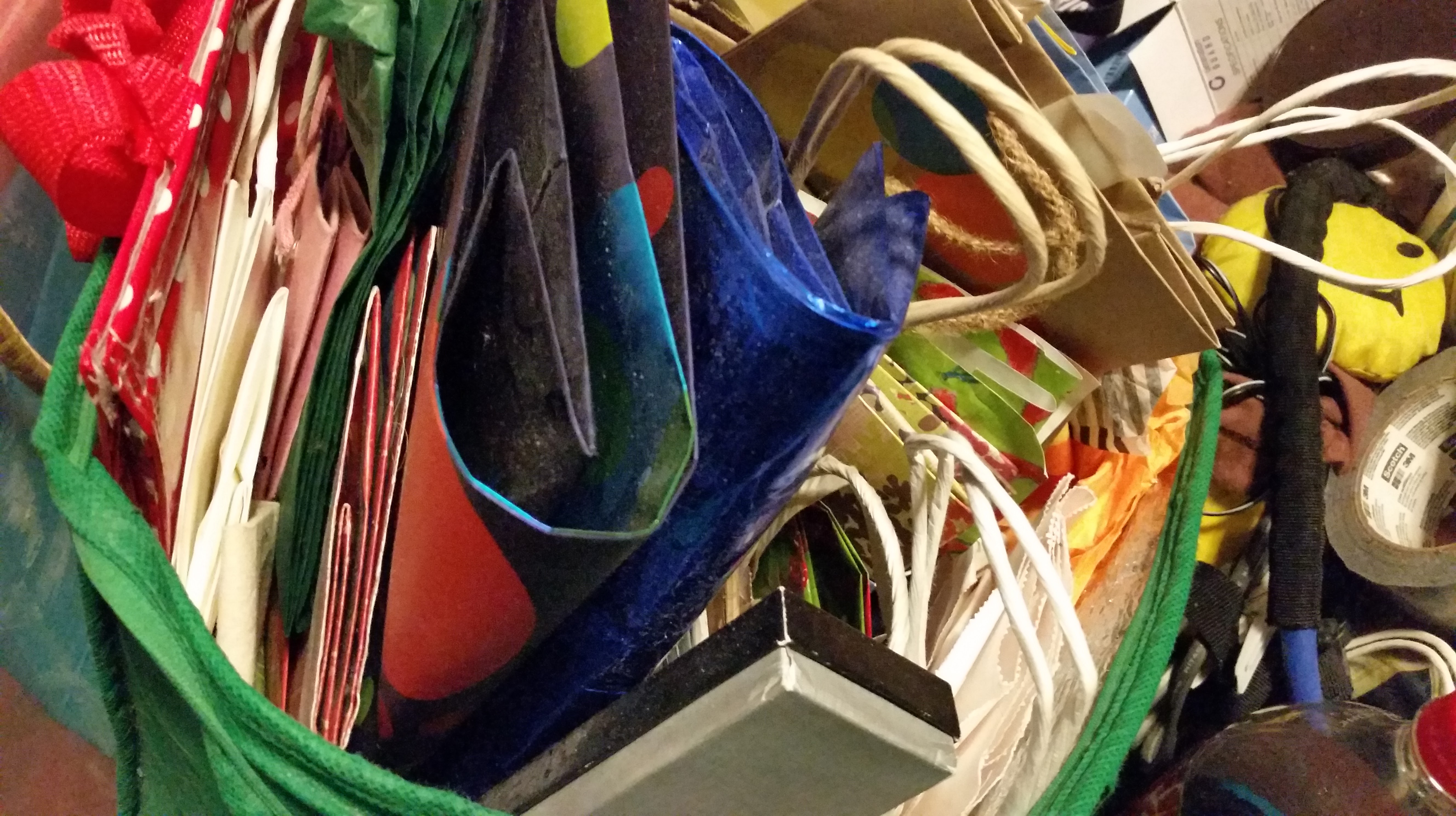
Yet we and others might better benefit if we take some time for ourselves. If we use a gift bag instead of wrapping paper, send a card instead of an actual gift or even offer to take friends out for a treat at a later date or offer to babysit their children, we downsize the stress. Less stress means more holiday spirit,and diminished expectations mean less guilt. We need to remember that what we really celebrate now is the coming of a child of Light, or the Light itself,into a world that needs it. Expectations aside, we can remember the true meaning of this season is about the gift of joy to all of us, from all of us.

 Most children have no concept of time and little to no understanding of loss, not to mention the concept of “goodbye.” Ironically however, one of the first things a mother teaches her baby is to wave “bye bye.” When we put them to bed for the night we are teaching them about leaving and being left. The first skill a child learns in the high chair is to drop things over the edge. At one level the life of any human being from birth onward is one long saying of goodbye.
 It was the custom in my family when I was growing up to invite a non family member to the holiday dinners held at the home of my grandmother or my Great Aunt Alice, so that there wouldn’t be any “rows” as they were called…what could be termed family arguments. People were more likely to be on their best behavior with a relative stranger or at least a distant relative in their midst. The family I grew up in was rather vociferous.
 and death or even disaster was to be spoken of, someone would say, “Not in front of the children.” The subject would be changed or I would be told to go off and play so the adults could continue their discussion. Yet because we had animals, death and change were part of my life. I witnessed the drowning of baby ducks and the demise of baby chicks. It was hard when a dog got into my pet rabbits’ pen and maimed them. My aunt’s gardener had to–as I was told, “put them out of their suffering.” Death was no stranger to my childhood. I am neither uncomfortable with it nor afraid of it.
 Those of us who come from New England are familiar with Yankee thrift: use it up, make do, or do without. I am of a conserving nature, having in addition to a Yankee father, a German mother born at the outset of WWI. Nothing was ever wasted in the house I grew up in. I thrived on hand-me-downs and thrift shop finds. Over the years I have accumulated clothing items I am happy to see again when their season rolls around. I often develop a fondness for clothing that has served me well.

 Pujakins