Heartwings Love Notes 2038 Precious Moments

Heartwings says, “Memories are fun to rummage through, and can be entertaining.”

I don’t use my cell phone often. Usually when I do, it’s to text one of a few friends to share with or for communication with family. So recently, when it rang with a number I didn’t recognize, I figured it was spam. I picked it up and found that it was a call from my grandson inviting us to visit on an app called Face Time. He lives with his wife in Saudi Arabia and he wanted to share his infant son, now four months, with Stephen and me.

Such precious moments are pages in my mental memory album. Some days they show up unbidden to help me recall a time and a place from the recent or even the distant past. One day I had an image of me in my skates, wobbling on a patch of frozen water in a wetland on my Great aunt’s property. I’m around eight years old and I’m wearing my snowsuit with its cute bonnet tied under my chin.

The feeling of the thick woolen snowsuit with its accompanying snow-pants comes back to me, the vivid memory expanding as I think about it. Nylon outerwear and lightweight winter clothing was in the future. Such memories are fun to enjoy and help me recall a childhood spent outdoors. As long as the weather was neither windy or too cold, I was appropriately dressed and sent out of doors to play among the trees and open fields of the property.

Recently I recalled how after there had been a great storm, a large section of a tree trunk, perhaps three feet in diameter and four or five long appeared in the wetlands we called a swamp, though by today’s standards, it really was not. I was delighted to see it and it became part of my fun, serving as a kind of home for small things. I played “house” a lot of the time. Then I found something really special. It was a pane of glass, not chipped, cracked or imperfect in any way, with blue and gold painted around the edges.

As I reflect on it now, it seems to me it was probably part of a picture frame, but then it was a magical item to be cherished and admired, a treasure given me by the sea. It became part of my log home and cherished accordingly. Then one day there was another great storm and when I went to where it had been, the log and the pane of glass were both gone without a trace. I was a bit sad, but soon went on to find other playthings. Still the items remain, standing out in my memory of my childhood spent outdoors in nature.

I know now how fortunate I was to have this special time growing up. So many children do not have that experience. Nature is such a fine teacher. Her school provides a lifelong experience that surpasses anything a computer or a cell phone can provide.

May you have recollections to enjoy from time to time

Blessings and best regards, Tasha Halpert

PS Love to hear your reminiscences, and hoping you would like to share. Please write me at tashahal@gmail.com, and sign up here at my blog to get more Love Notes at http://tashasperspective/pujakins.
Heartwings Love Note 2000: It’s About Time

This Love Note marks a milestone: Number 2000 in total over a period of many years, at 52 a year. You can do the math how many that is. I am eternally grateful to my readers and to the invisibles who have had a hand in the Notes’ creation.

Heartwings says, “Waste not, want not; use whatever time you have wisely.”

When as a child I visited my grandmother in her summer home in Beverly farms, I would stand by the big cuckoo clock in the hall to see the bird emerge. I loved it! I even remember being very little and someone lifting me to see the bird up close. My dear grandmother would even advance the hands to make it sound the hour ahead, just for me. Perhaps that was the beginning of my fascination with time and clocks. All these years later, its passage remains a mystery.

 I remember as a child waking up on sunny summer mornings and thinking about how I had a whole day to play, and what fun that would be. Indeed, the hours stretched out and brought me much joy as I amused myself. An only child until I was eight, I had developed a good ability to entertain myself. I was never lonely, though I was mostly alone unless an adult was interested in playing with me, and mostly they weren’t, so my time was my own.

Now, some eighty years later when I wake up on any morning, whatever the time of year, I go over in my mind what I need to get done, not to mention what’s left over to do from the day before. (Usually, I had planned more than I could accomplish.) Then as I get ready, beginning with my exercises, I prioritize my “to do” list. It’s simpler than it used to be. Eighty years holds a world of change, and hopefully I have learned what’s important.

Children tend to live as human beings; adults as human doings. And time is at the center of the action in either stage of life.  It seems there is only so much of it—sixty seconds make a minute, or so they say. However, how do you feel after holding your breath for sixty seconds or laughing for the same amount of time? Do they feel the same? That’s the odd thing about time. It’s supposed to measure the same, yet it does not, at least in my experience feel that way. Another example is going somewhere versus coming back, which feels much shorter, clocks to the contrary.

Stephen and I have always collected interesting clocks. Our small apartment is full of them. Most of them are synchronized, more or less, within five or so minutes. Several display the accurate time, and others may lag a bit, depending on the age of their batteries. However, I know which ones are correct. Also, I like seeing what time it is whenever I feel like it, even without wearing a watch—mine is currently in need of batteries. I’m not sure I get any more done by looking, but I do like to know. Recently I came across a study that showed that the heart’s activity influences our perception of time as it passes. Time is a conundrum it’s fun to explore.

Enjoy whatever time you have and don’t try to save it at the price of your joy.

Blessings and best regards, Tasha Halpert

How do you feel about time? Do you take your time? Or do you find there’s never enough? How’s your time management. Write and tell me about your relationship with time. I so love to hear from readers. Please write me at tashahal@gmail.com. You can see more love notes on my website www.heartwingsandfriends.com, or see my blog at https://tashasperspective.com.

Heartwings Love Notes 1098 Where Can It Be

Heartwings says, “Putting things back where they belong is important.”

As a child I was taught to be tidy. Emily, the practical nurse my parents hired to help care for me when I was around two or so, tried hard to make sure I learned to put my toys, and later, my clothing away. She was with us until I was around eight years old when she left to get married and have a family of her own. Unlike my mother, she was patient and physically affectionate.

I am not faulting my mother in any way. Her behavior was molded by her upbringing. While kind and a good mother, she grew up with strict German parents who did not encourage demonstrative behavior. Even as a grandmother she was reluctant to accept or to give physical affection. Fun and fond behavior was not a priority, neatness was. 

Once I was married and had children of my own, I did my best to be as tidy as I could. This grew more difficult with each addition to the family, which eventually added up to five children. I didn’t have a lot of time to devote to being neat or organized. My mother often criticized me for my “messy house,” and it never seemed to occur to her that there was a good reason for this. I thought it was more important to enjoy and care for my children than to be neat.

Neatness does have virtues beyond looking nice. Having things in order means when I need to find something, I’ll know where it is and can find it without any difficulty. That is why the saying, “a place for everything and everything in its place,” has been my guideline as long as I can remember. For instance, I try hard to keep all of my tools where I can easily reach them and as close as possible to where they will be used. Being a systematic Scorpio, I have sectioned off the shelves in my pantry by assigning them to what I can make or do with the contents.

However, unfortunately this works as long as I am the only person putting things away. Also, there often is more to be put away than the shelves can conveniently hold. This results in items get shoved to the back, effectively disappearing from view and becoming unavailable. So, although I no longer have little children to run around after or an eagle-eyed mother judging my attempts to be tidy, I struggle still with my tidiness conundrums.

The current state of my health doesn’t help either. Despite Stephen’s great help, much does not get done. There are days I simply only have enough energy to cook meals and see to my immediate emails, not to mention attend doctors’ appointments. Prioritizing becomes important, and as it was once so it is again: I do what is important and let the rest go.

Gone but not Forgotten

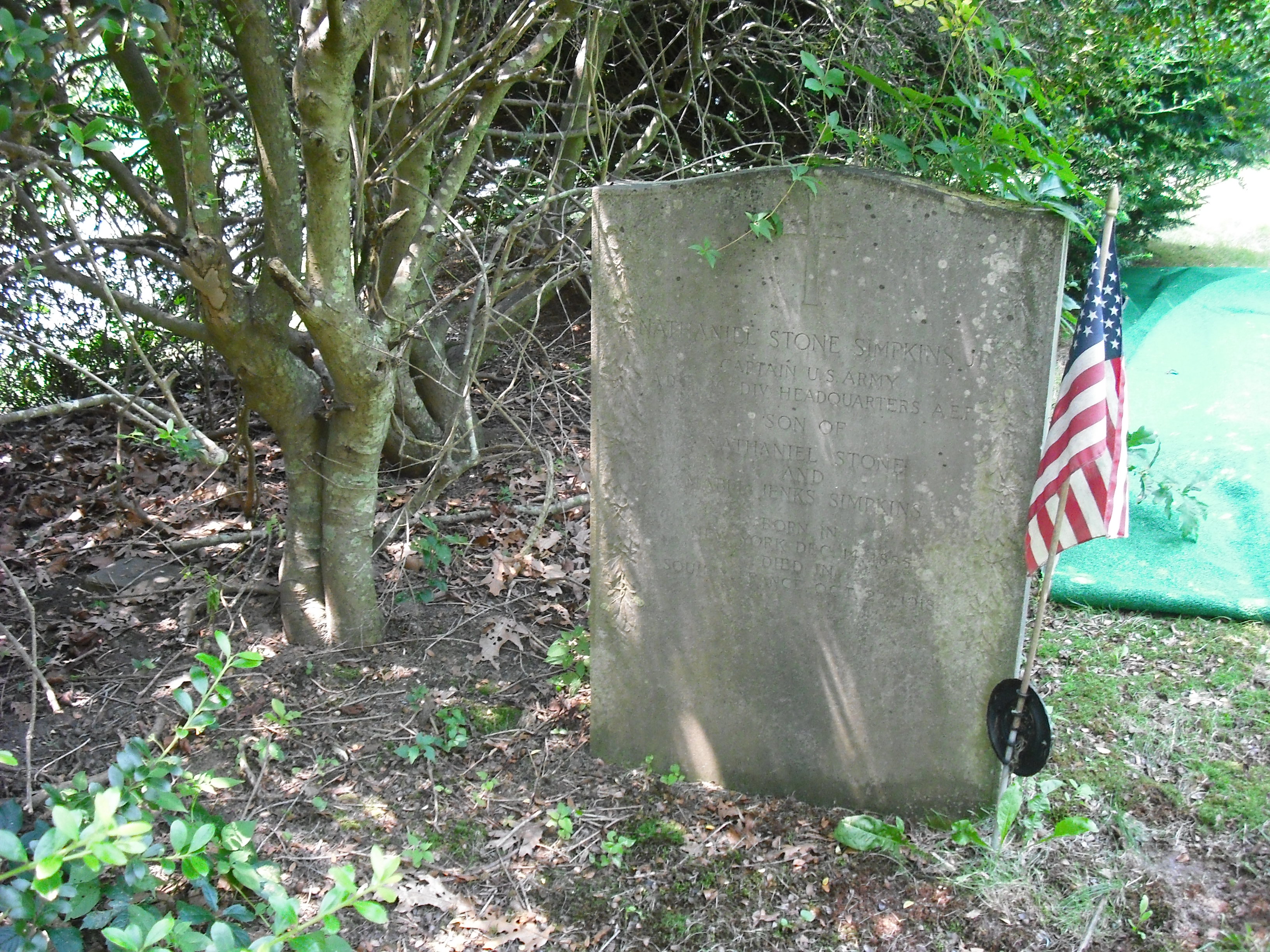
SimpkinsMy brother and his wife just moved to Illinois, leaving behind the home we both grew up in on the North Shore In the next town, there is a square dedicated to our grandfather who died in World War One. Every year the parade stops in the street by the square. His name is on a pole in front of the fire station there, and they put a wreath on it each year in his memory. When I was a child my grandmother used to bring a big bunch of carnations to place inside the wreath. In later years my brother always attended the ceremony and participated. Now he will no longer be able to do so. Still he will have many years of memories, dating back to his boyhood.

Memories are wonderful things. I take great pleasure in many of mine, and I can open and enjoy them any time I wish. When I was a little girl living in Manchester by the Sea, my family shopped for our groceries in the village, as well as sundries from a small shop that carried a variety of small useful things we used often. For larger purchases my mother drove to Beverly, where there was a large department store called Almy’s, as well as a Woolworth’s and a Grant’s. However, for fancy goods like wedding presents my parents shopped in Salem, the next town over, at a store that glittered with silver and jewelry, called Daniel Lowe’s.

The Daniel Lowe’s building has transformed and Salem has become a tourist mecca for seekers of magical items and New Age accoutrements. Beverly too is much changed. Almy’s is long gone, as are the 5 and 10 cent stores I enjoyed.  Even the bakery that later on I shopped at with my children, who remember it still for its delicious cookies, is no more. Yet the stores of my childhood live on in my memory, ready for me to walk through and gaze again at their counters holding a mixture of the practical and the precious.

People I have known who have vanished from my active life also remain for me to recall. Those who are amongst the living I can send a Christmas card to. Those who no longer walk the earth occupy a kind of photo album available to my memory. I turn the pages sometimes and think with pleasure of the experiences we shared, and how I enjoyed them. I am grateful for these and for the time we spent: my grandmother with her endless card games and trips in her ancient automobile, dear departed neighbors from an earlier place we lived in Grafton, and more.

As Memorial Day approaches, I think not only of the people but also the places and even possessions of the past. They are gone only from the physical part of life. They live on in my memory as in the memories of others who may have known of them. One of the fun experiences to be had in gathering with family or old friends is the memories to be shared and enjoyed together. Memorial Day encourages me to think not only about my dear departed, or even those who gave their lives that I might be free, but of the sweetness of those memories. As in my mind I see these faces and these places, they seem to me to be like flowers I place upon the granite memorials of that and those who have departed.


Hoop Skirts and Test Patterns

I find fashion to be endlessly entertaining. When you live as long as I have, you have seen many trends come and go.  For instance I’m always amused when I see people of every size walking round in tight clothing. Were she still alive my mother would be shocked and making comments. As I was growing up, at most clothing might be tight around the bust and waist, but not anywhere else. Too, as if pregnancy was not quite proper, one wore tent like garments as soon as there was a bulge. Ball gowns were bolstered with stays and wedding gowns were voluminous and relatively modest.

Recently I was looking at a pretty formal gown in a consignment store and it brought back memories of ones I used to wear back in the days when formal dances were a part of my life. I didn’t go to a school that featured proms, however there was an annual series of dances held by a woman who ran a dancing school for grade school boys and girls. These dances were an extension of her classes and held for high school age students in the area.

She had very strict rules for the young ladies who wanted to participate. Gowns had to be of a certain type, and nothing too bare or plunging was permitted. This starchy New England matron who ran the dances was also particular about our weight. My dear mother put me on a diet that summer so I would conform to the ideal held out for those who wished to attend. “I don’t want any wallflowers at my dances,” she was known to say.

The dress I was looking in the consignment store at was a strapless, full length gown. The skirt was fairly narrow. I smiled to myself, remembering the hoop skirt that went under one of my first full skirted formals. How difficult it was to sit down without the darn thing flying up in the air, taking my skirt with it, revealing my gartered stockings to the world. There were other uncomfortable petticoats, starched and stiff that came later. My mother would laugh and say sometimes one must suffer for beauty. Although she wore a girdle for years and tried to get me to wear one, I refused to.

Along with hoop skirts and starched petticoats, no one born today or even many born a while ago know what a test pattern is, nor has seen one. When my parents got our first TV, there were no programs before around 4 o’clock in the afternoon and after around midnight at night.  All that was on the screen otherwise was a black and white test pattern from the different TV stations.

There were no color TVs. Nor was there color programming! Movies were shown on Sunday afternoons and I remember before we got our TV, the joy of watching them at a friend’s home. In those days a comic book was ten cents, and I wasn’t permitted to buy one but I could read hers. Having lived a long life, I can recall much that no longer exists except in the museum of memory. It’s fun to visit there occasionally, though I’d never want to live there all the time.

True Charity

Clivia partial Bloom 3          In St. Paul’s well known Letter to the Corinthians, Book 1, Chapter 13, he speaks of the nature of true charity.  He lists ways to give and to each he adds “and have not true charity” (to paraphrase) “what I do is hollow and meaningless.” His description of true charity is the equivalent of a definition of unconditional love. The giving of love in unconditional ways means we do not expect anything back from our giving, nor do we make any judgments about those to whom we are giving.

Doing this necessitates the undoing of a lot of old programming we have learned from the adults around us as we are growing up. It is natural to be judgmental. To one degree or another, we all are. The first lesson is to become aware of how and when we are, and the second is to stop the attitude before it reaches words or action. Recently I was given a wonderful example of a positive approach to true charity.

It is a sweet story, and I want to share it because It seems as though it provides such a good example of unconditional love.  A dear friend who no longer lives close by called me recently to catch up on our mutual activities. As we chatted about our lives and what we had been doing, she confided in me that she had taken on an interesting Lenten discipline. For Lent this year she decided to be of service to the homeless population.

Several times a week or more she purchases food and toiletries with her own money and goes to where homeless people are gathered. She offers them a choice between food and toiletries, and she shares her purchases with those in need. She converses with them, interacting with them without judgment or feelings of pity. Some are grateful, others want both or more, and she very reasonably tells them that no, they must share. Sometimes a conversation ensues, and she participates in it peacefully and without preaching.

What she is doing is true charity: giving with unconditional love. This is often difficult for us to do because often when we give we expect something back even if only thanks. We may also put parameters on our giving: “if I do this for you, you must do this for me,” the “this” being anything from cleaning up or attending a service, to giving up something they may wish to keep doing. This kind of giving is not true charity. It is a kind of manipulation or at least an attempt to manipulate.

We learn bribery as small children. Our parents hold out a treat in order to get us to do something, and it engenders an attitude that we may keep as adults. “If you do this for me, I will do that for you,” is example. When we want something from someone it is all too easy to act thus. Giving without wanting anything back, and even more, interacting with those who are often shunned and despised for their behavior, is true charity. It warmed my heart to hear what she was doing, and I told her so.

If you haven’t discovered my new book: Up to my Neck in Lemons, check it out on Amazon. It includes articles, poems and lemon recipes too.  You can purchase an autographed copy from me at P.O. Box 171, North Grafton MA for $15. Postage and handling included.

The Importance of Cherishing Myself

Tasha full f aceOn the rare occasions when I have been without anyone to cook for except myself I found that I had very little interest in making my own meals. While I truly love to cook for my friends and my family, in my experience, it brings me been little to no pleasure to cook just for me. Lately, I haven’t had to deal with that problem, and while I hope I won’t have to in the future, if I do, I will try to think differently. This attitude may be why most if not all of the retirement and assisted living communities have food plans included in their fees, as well as dining rooms that serve up to three meals a day.
For most of us cherishing ourselves is not easy. It’s not something that comes naturally, and there’s a reason for that. While because they don’t know much about being an individual, very young children are naturally unselfish, once they learn to think of themselves as “me” most of their parents begin teaching them to share. “Sharing is caring” becomes a kind of guidance with which to approach both giving and doing. This is all very well until we begin to leave ourselves out of the sharing equation. It is vital to remember ourselves when we share. I am happier and more content when I include myself in my decisions and actions concerning others.

What can make us forget to do that is that often it feels better to give than to receive. Giving can even make us feel a bit superior to the recipient, a kind of pat on the head. It can also incline us to wish to be thanked or even to be given back to in some way. If or when we do not get a return on our gift, we may grow resentful. This then can create a feeling of martyrdom or even bitterness as in: “I did thus and such for them and got nothing back,” or “Look what I gave them and what did they give me?!”

If we cherish others at our own expense and forget to cherish ourselves, we do both the recipient and ourselves a disservice. It is not difficult to think of ways to cherish ourselves. However given that it may feel more virtuous to focus on others, it may also be easier to do so. Yet small acts on our own behalf can make a big difference. For instance: remembering to buy and prepare a kind of tea I like along with the one that Stephen prefers starts my morning happily. Remembering to ask him to join me in doing tasks or walking enhances my day.

My own small acts of kindness to myself, like taking the time to sit with my feet up and read a fun book for at least an hour a day, or occasionally stopping what I am doing and going out on the porch for a breath of fresh air make me feel good. I also appreciate it when I remember to do a bit of stretching or some exercise. When I discover a new pair of socks at my favorite online provider, or a pretty but unnecessary item of clothing in our local thrift store, I no longer feel guilty giving this to myself. Sharing means giving equally, not depriving oneself. If I encounter any guilt when I do something for me, I remind myself that I deserve to be cherished, and I smile and tell myself, “I love you too.”

Spring is a Time for Awakening

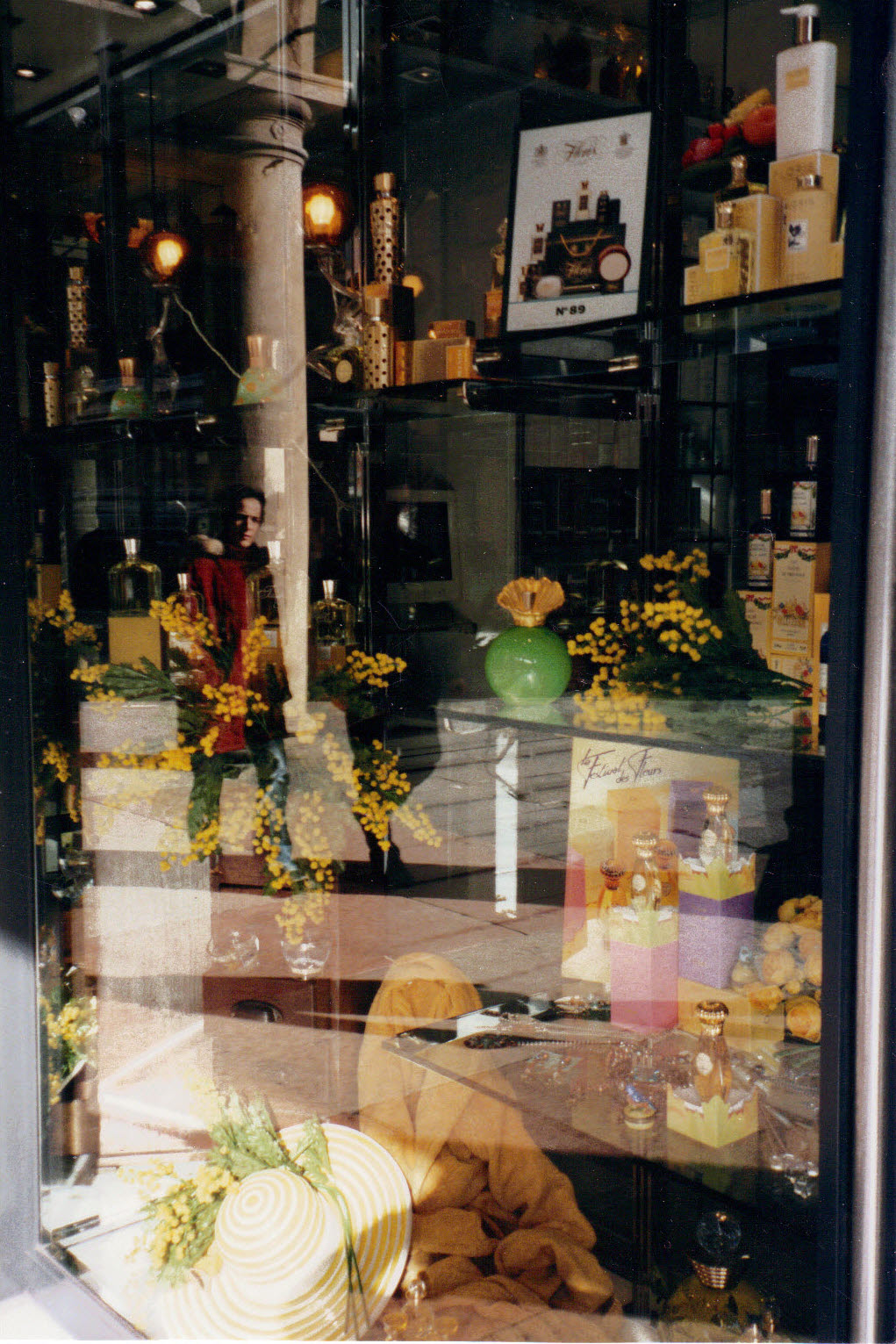
Maple ree flowers and leaves 1Though I am fonder of some than of others, for me every season has its unique blessings. Autumn has always been a favorite of mine because I like the crispness of the air and the vivid colors that paint the scenery. However, the cycle of the seasons produces different feelings in everyone and we all have our favorites. It may be that as a poet I am more sensitive to or pay more attention to the change of the seasons because I feel it so keenly. Winter for me is a time for rest and often for extra sleep. The dark hours encourage it. During the winter, like the bare branched trees and the hibernating creatures, I am less active and more inclined to quieter occupations.
It’s easy to sleep late in the winter. The light does not come through the curtains until morning is well advanced. Chilly weather does not encourage leaving warm covers for frigid floors. Yet as the light hours grow longer and the dark ones shorter, the day calls to me sooner and sooner. Reluctant as I may be to get up from my bed, it becomes less alluring to linger than to rise into the day. Even as the trees and the birds greet the brightening weeks, with the spring, something in me begins to wake up.

Winter encourages me to make soups and stews. My pantry and refrigerator are stocked with warming foods. With the advance of spring I think more about salads and lighter meals. I toss the cold weather recipes that I have accumulated yet not found time to make and clip out more recent ones geared to fresher, less sturdy meal components. Now that I can see it, when I look around at the winter dust on shelves and surfaces, I feel more diligent about eliminating it. Somehow when I can’t see it, it is so much easier to ignore. Now it no longer is.

When I was out and about, my eyes had become accustomed to bare trees sleeping in the cold. All winter I admired the still shapes of the bare branches against the sky. Now as the trees blossom and leaf out, they seem to be dancing with joy. The spring breezes flutter the trees’ new emerging clothing as they dress themselves in their fresh spring wardrobes. When I go about my errands, my heart sings along with the turning wheels of my car.

When I used visit my daughter in Italy, she would come into my room of a morning to waken me from my jet-lagged sleep. She would open the curtains and turn to me as I clung to my pillow. “Wakey, wakey,” she’d say with a smile. Finally I’d open my eyes and greet the day, glad to be awake and alive, ready for a new adventure. Spring feels like that. It is time to pursue the new, the untried, the innovative. Time to put away the darker, heavier winter clothes and put on light, bright colors and fabrics, to free the feet of boots and don sandals. Time to awaken to the new season and to rejoice in it.

Riding a Time Machine into the Past

Reflections in SummerWhat fun it would be to hop onto a time machine and return to the Christmas shopping of my childhood, after I had turned eight. How I enjoyed buying my parents small stocking presents at Grants and Woolworth’s. I want to return to the days when the ten dollars I had saved up sufficed to purchase about everything I wanted to buy for them. Maybe there would even be enough left over for an ice cream cone. I loved the way the store smelled when I walked in, and the overflowing counters with the glass part in front to make sure items didn’t fall off.

I didn’t mind no longer believing that Santa filled the stockings, because it was such fun to wrap up my inexpensive gifts to fill them for my parents. Best of all would be to write notes on them the way they did. I bought Ponds cold cream and vanishing cream each year. I think they were ten or twenty cents each.

My mother told us a joke once about the latter. It seems a child took off all her clothes, rubbed her whole body with vanishing cream, and then went downstairs where her parents were hosing a party. The polite guests pretended not to see her. The next morning she told her mother gleefully that vanishing cream really worked. My twelve year old self thought that was very funny.

My time machine would whisk me back to my Great Aunt’s dining room with all the relatives gathered together and finger bowls brought in at the end of the Christmas meal–often roast beef with Yorkshire pudding. Sometimes there would be a plum pudding brought in and ignited after brandy was poured over it. The dancing flames were blue and very exciting. I didn’t care much for the plum pudding but the had sauce with it was pretty good.

It would take me down the snowy streets with the sparkling stars way up high, and the carols on the radio. Those times seem quite simple compared to now. The television had only a few channels, and the programs didn’t play all night but ended with a test pattern. Mothers mostly were at home. Most had only one car per family, and my mother’s friends met bi monthly for lunch and chitchat over their mending.

In my time machine I would also visit the wondrous Daniel Lowe’s department store in Salem with all the glittering silver and crystal when you walked in. I did no Christmas shopping there. Salem was the big city to me and we seldom went. Nearby Beverly was smaller. That was where the Woolworth’s and the Grant’s were, as well as Almay’s department store. We did some of our shopping there. In those less frantic times no one thought to purchase gifts until a few weeks before Christmas. The stores waited until after Thanksgiving to decorate for the holidays or play Christmas music. However, that was then. Though different from that time, now has its delights as well. While the past is fine to visit, I wouldn’t wish to live there.

Perspective Makes All the Difference

Cherry Blossoms on a rainy dayAt the time I was born my mother was newly come to the US, a bride of less than a year. Except for my father, she was very much alone in a big city, and I was her only companion for quite a while. I have often thought that my persistently positive perspective on life may have had its roots in my trying to cheer her up when she was sad and missing her family and friends back in her home country. Over the years since I have come to understand the power of a positive perspective on a potentially negative situation or experience.

This has become essential to my work. When I tell people I am a writer, they often ask me what I write. If I say I write essays, it sounds as though I am writing from a scholarly point of view. If I say I do inspirational writing, it sounds as though I am coming from a religious perspective. In truth, what I am doing in my columns is to simply present a different or alternative point of view from that which some might take about any given situation or experience. I write to be helpful, but it is self help I write about. Helping others to help themselves is my intention and my goal.

There is little we can do about circumstances. Daily life presents us with issues and difficulties we must deal with. The school of experience is our ever-present teacher, one we cannot escape no matter what we do. I’ve often felt that maturity or adulthood truly begins when we’re willing to learn from this teacher rather than moan, groan and feel as though we are victims of fate, circumstance or those who might perpetrate it. It is a lot easier to complain than it is to “bite the bullet” and admit there might be something to learn from any given situation.

I believe the expression “bite the bullet” comes from battlefield medicine when in the days gone by the surgeon had to amputate or otherwise operate without anesthesia. After whiskey was poured liberally into the patient, a bullet was put between his jaws to bite down on as a way to keep from crying out. Whether this is actually true or not it makes a good metaphor. When our focus is put not on complaint or disappointment but on what can be gained from whatever is happening to us, coping becomes easier and wisdom more accessible.

In my own life right now I am dealing with a change in lifestyle and a need to take better care of myself. I have learned that much of what I used to take for granted, I no longer can. Exercise is not an option it is a necessity. I need to do additional work on my body to restore it to better working order. I could complain, or even bemoan my fate. Instead I rejoice that I now have a good way to lose weight, that I can become stronger and healthier with effort and that it is good and helpful to be made to do that. Therefore I bless these circumstances and state firmly that I am exceedingly grateful for them.