Keeping the Peace without Sacrifice

toys, 2 lambs It was the custom in my family when I was growing up to invite a non family member to the holiday dinners held at the home of my grandmother or my Great Aunt Alice, so that there wouldn’t be any “rows” as they were called…what could be termed family arguments. People were more likely to be on their best behavior with a relative stranger or at least a distant relative in their midst. The family I grew up in was rather vociferous.

My parents tended to discuss their differences at the top of their lungs. Their shouting made me cringe. They must have grown up doing this. My father and his mother my grandmother, used to have loud disagreements. My mother once told me they would telephone each other, call and then hurry to be the first to bang down the phone. My mother also talked about the “fights” she had with her sister; she too grew up in the habit of loud disagreement. Disliking my discomfort, I resolved when I grew up there would be no fighting in my family.

When neighborhood children played in my yard, they knew if they provoked conflict they would be sent home. If my children were to begin fighting I would separate them and send them to their rooms. In addition, if I strongly disagreed with something their father wanted or said, I would wait until they were out of earshot before I discussed it with him. I had determined there would only be peace throughout my entire household. No one was permitted to fight.

There is one problem with doing away with conflict entirely: any resentment or unhappiness can linger and come out in sneaky ways, like cutting or sarcastic remarks or other hurtful behavior. Even today I have to watch myself if I haven’t expressed my personal upset. I am liable to say something mean or unkind and call it a joke when it really is not.

However, in those days I didn’t know how conflict could be resolved while taking people’s feelings into account. I have since learned about conflict resolution and about ways to carry on discussions in a reasonable fashion. The “talking stick” method means one person gets to speak without interruption while holding a talking talisman. When he or she is done, the next person holds it and has his or her say. Even young children can learn to abide by this method.

Keeping the peace does not mean keeping silent, it does mean expressing oneself without being judgmental or vindictive. Feelings can be expressed and people can agree to disagree. What is important is to learn how to express negative feelings responsibly. I can say, “I feel,” not “you make me feel.” When I take responsibility for how I feel, others can do the same. When I speak my truth with kindness, I evoke the same response. When everyone listens, resolutions can be arrived at and peace can be made without anger, resentment or the sacrifice of anyone’s well being.
A Simple Meal for a Hot Day

Daisies (shasta) Hi resI remember my mother on a hot summer day wiping the sweat from her brow as she prepared the vegetables and fruit she canned for us to eat in the Winter. We lived on the property of my great aunt Alice whose gardener grew planted, harvested and shared lots of good food from her extensive garden. My mother was frugal and to her mind saving money in the winter was worth her efforts in the summer. In her mind nothing was ever to be wasted. While I feel the same way, I don’t have a garden to draw upon, however I do have a wonderful local farm stand that supplies me with fine food.
I tend to lose my appetite in the heat, thus I don’t much like cooking in the summer. Autumn is my favorite season because when the weather cools I feel much more like cooking as well as like eating. However it’s not then now, so I need to be in the present moment in the kitchen. Simple recipes are my go to solution for eating healthy food in this hot weather. I find it’s easier to motivate myself to cook when I don’t have to spend a lot of time doing it.

Salads are all very well in hot weather, however I do get tired of them and I actually prefer a hot meal even when it is warm outside. One of my favorite easy summer recipes combines freshly available local greens and pasta. It really doesn’t matter what greens you use. Personally I like the combination of spinach and Swiss chard, however, kale with spinach or chard is good too, and so are collard greens, broccoli rabe, or other potential ingredients you can use singly or in combination.

I prefer using my food processor to mix the greens together, adding good olive oil and some fresh garlic as well. Using a blender, while doable would be tedious however lacking a food processor you could use a food mill to grind and blend the cooked greens. My food processor is a very useful tool and one that even though I like to cut my vegetables by hand, I have come to rely on for certain kinds of food preparation. I treasure my kitchen tools. Some of them date back more years than I prefer to count. I have a wooden cutting board I received at a shower for my first child; she is now a grandmother too.

The recipe itself is very simple. Ingredients are: a pound or so of spinach, the same of Swiss chard, or use other greens as suggested above. Cook them separately in as little water as possible. Drain well and turn together into the food processor bowl. Add 3 or 4 tablespoons good olive oil, 2 medium cloves chopped or sliced garlic or 1 large one, and a pinch or two of salt. Process until everything is nicely blended. Meanwhile, cook pasta of your choice to serve your diners. When done, drain, put in a serving bowl and pour the mingled greens over it. Stir well and serve with freshly grated Parmesan. Simple, tasty, and good for you as well! Finish the meal with some fresh watermelon and enjoy.

The Preciousness of Remembering

When I was a child Little Tasha 4and death or even disaster was to be spoken of, someone would say, “Not in front of the children.” The subject would be changed or I would be told to go off and play so the adults could continue their discussion. Yet because we had animals, death and change were part of my life. I witnessed the drowning of baby ducks and the demise of baby chicks. It was hard when a dog got into my pet rabbits’ pen and maimed them. My aunt’s gardener had to–as I was told, “put them out of their suffering.” Death was no stranger to my childhood. I am neither uncomfortable with it nor afraid of it.

Still, it does have an effect. The recent passing of a dear friend has brought a sense of immediacy to my relationships, and prompted a renewed sense of attention to my way of thinking about life. She and I used to speak each morning except Sundays. More than once I said to Stephen, “One day the phone will not ring at 9:30 every day.” Then indeed that day did come. While I miss my friend, I know she is in a much more comfortable and happy place than she has been for some time. Though I do miss her calls I also rejoice for her.

I am happy to have pleasant memories of our time together. That is the saving grace of partings. It is also a reminder to focus when I am with a dear one and to be present in order to have something to remember. More and more as I get older I have come to realize that endings come whether we want them to or not. We have no way of knowing whether or not any given conversation, meeting or interaction with another may be our last. I do not say this because I have a morbid fear of endings but rather as a reminder that any time we spend with another may be significant.

When we are children we have no understanding of how it is that things change or perhaps end. That ignorance may even be important to children’s comfort and sense of security. Most adults grow accustomed to change and learn to flow with it. It may be an aspect of maturity in human beings to be able to do that. In my life there have been many changes I could never have anticipated. Being able to adapt to them has been crucial to my happiness. Developing a sense of detachment to an anticipated condition of permanence has been not only valuable but also essential.

When I was a child, I could buy an ice cream cone for a nickel. Now even the smallest one costs 50 times that. The decor in my parents’ living room changed once in my memory. Today many people redecorate frequently. Then divorce was rare, people stayed at the same job for most of their lives, I could go on and on about how it used to be. My point is that change is more than ever a constant in most lives. For our comfort it is important to be able to deal with all forms of change, whether of décor or of circumstances. When I make the time to focus my attention and to appreciate what is happening, whether with a relationship or an experience, I have much less regret when it ends.

The Wonderful Jacket

Tasha in hood 2Those of us who come from New England are familiar with Yankee thrift: use it up, make do, or do without. I am of a conserving nature, having in addition to a Yankee father, a German mother born at the outset of WWI. Nothing was ever wasted in the house I grew up in. I thrived on hand-me-downs and thrift shop finds. Over the years I have accumulated clothing items I am happy to see again when their season rolls around. I often develop a fondness for clothing that has served me well.
Recently as I pushed my wagon through the aisles of a grocery store, I saw a woman standing by the meat counter in a unique and lovely white furry jacket. “I can’t resist telling you I think your jacket is magnificent,” I told her. She laughed and said it was from the 70’s, yet she could never bear to part with it. “Nor should you,” I replied. We each continued on our way, pushing our shopping carts in opposite directions.

I smiled to myself. I was wearing a jacket I have had for close to thirty years. It is a fairly ordinary, black, nylon one, with some very useful pockets. Black fur edges the hood. It is warm and comfortable, and probably unremarkable as jackets go. However the story of how I acquired it and what has been done to it since makes it special.

On a trip to the Cape many years ago, Stephen and I were in a consignment shop, poking around. I saw the jacket hanging on a rack, and figured I might be able to use it. I took it down, intending to try it on. “If you can zip it up you can have it,” said the woman behind the counter. I looked down at the zipper and saw that it was slightly frayed on the bottom and could be a bit challenging. When I tried it on I liked the feel of the jacket and resolved to see if indeed I could zip it.

Very carefully I inserted the frayed end into the metal slot and continued to be careful as I zipped it all the way up. The saleswoman was good at her word and gave me the jacket without charge. In the ensuing years I went on zipping it up carefully until finally one year I invested in a new zipper. Along the way parts of the jacket lining began to wear out. I was fortunate in having friends who at different times were able to repair the worn places in the lining so that it looked almost new.

Now when I put on my wonderful warm winter jacket I remember my friends and their generous work on my behalf. I also think how fortunate I was to have found it, been able to zip it up and to have it still after all these many years. What keeps me warm in it is more than the lining or the material, it is the memories and the love of friends that has been sewn into it. How could I ever part with this jacket? I believe I never could, nor do I ever wish to.


Walking Through My Mother’s Life

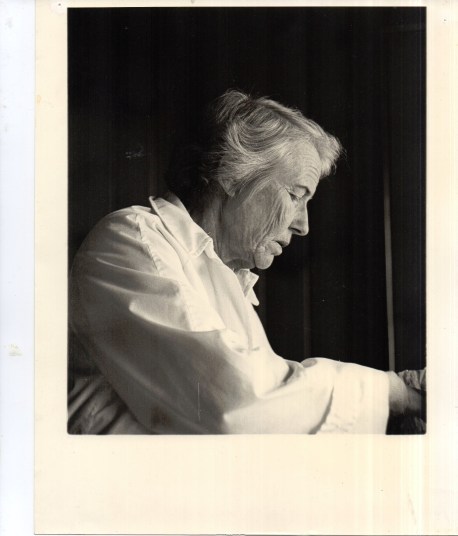
Mom profile by Nina005The medium sized cardboard carton was waiting for me to open and sort through the contents. My mother lived to the age of ninety eight, and it looked as though she never threw anything out that she received in the mail. I had brought it back with me from the storage unit in South Carolina. It contained paper of all sorts, including old photographs, that she had seen fit to keep for many years. Until I opened it I had no idea just how long those years had been.

Now for weeks and then months it had waited for me to go through it. In an effort to motivate myself I kept moving it around. I knew it would take the better part of several days to do, and I was reluctant to set aside other tasks to address one that had no deadline. Finally I put it where I could not ignore it: right under my desk. I had to look at it every time I sat down to do anything. Finally I got tired of looking at it and set to my task.

Some of what I found was reminiscent of my mother’s life in the 40’s and 50’s: bills and sales slips from department stores, electric bills and bills for milk delivery, drycleaning, and so on. The prices of things from those days were interesting. It was both surprising and sad to see what a dollar used to buy.

The names of the stores brought back memories of being with my mother when I was small, taken along on shopping trips. To my young eyes, the department store was a wondrous place holding all sorts of interesting things to look at. She also kept paid bills for expenses related to her art and the galleries she had under her own name. I set these aside for my daughter who is planning a future retrospective exhibit of her grandmother’s art.

The quantities of letters on thin airmail paper were impossible to read. Plus many of them were in German or Spanish. The dates on some envelopes went back to before my mother married my father. It seems she had quite a collection of boyfriends and there were many letters, some I could decipher a little addressed to her in endearing terms. It amazed me that she had managed to keep and haul around that collection for so long. The earliest went back more than 70 years. I had a wonderful walk through her life and times, and I found myself happy to have been able to touch into my own memories of those days..

It seems to me that things were far more innocent then. There were rules to be followed. These had been handed down from generation to generation and applied as long as life was stable and people’s roles mostly well defined. There was more safety in living that way. There are people who wish it were still like that today, however their numbers are dwindling. Once change begins it cannot be stopped or the results will be like a cancer that devours its host. Growth often comes about with pain. However, the freedom of being out from under the rigidity of the life my mother lived with is precious. I am grateful for it.


Memories of a Very Special Neighbor

Laura Dodge's Dancing Dolls        I grew up in the country, and the only neighbor I really knew was my Great Aunt Alice, because we lived in a smaller home on part of her property. There were no children for me to play with except some siblings across the street. My parents did not know theirs and I was not permitted to invite them in or to go to their house. To be fair, they were not a very kind bunch. There were two sisters and their brother, who was rather rough. They went to a different school than I did and I had very little in common with them. It is lovely to have neighbors, and once I had one who was special indeed.

I was recently able to get back in touch with this neighbor of many years ago. Her children and mine were of an age and we lived in a small town on the North Shore of Boston. In our suburban neighborhood our houses were only a few yards apart. Some days when I was upstairs, even without the windows being open I could hear her playing her recorder. A musician and an artist by avocation, she had a dachshund that she had taught to accompany her when she played happy birthday on the piano.

We were able to share only a couple of phone calls in the few months I had rediscovered her. Now has come the news that she has passed on. Memories of our years as neighbors flood back to me. One favorite is the time I was grilling a boned leg of lamb on my charcoal grill in the back yard. To my dismay I looked out and saw her German shepherd running off with it in his mouth. She bravely rescued it from him, cooked it for her family and gave me another leg of lamb that was even then roasting in her oven. Many times after that over cups of tea we laughed together, remembering.

Our children played together in our yards and she shared produce from her garden with me. Generous with her time and energy, she taught me a lot about sewing, and helped me whenever I was stuck trying to do something too advanced for my sewing machine skills. She helped me out when my younger children were born, brought food and kept me company. I was sad when she sold her house and moved away. Later after he was grown and on his own she took in my late son and as he helped her with hers, taught him a lot about gardening. I was very grateful to her for her kindness to him.

No matter how long someone you may cherish lives–and she was 92 when she passed on, it is never long enough to do and say all the things you wish you had done and said. I have to be content with what remains of my memories and of the conversations we had before she went to her final rest. She was a very special friend as well as a wonderful neighbor and I am sure many besides me have fond memories of her. A giving, sharing person, she set a good example for everyone who knew her. She lived a kind and caring life and will I am sure continue her loving ways now that she has her angel wings.

Perspective Makes All the Difference

Cherry Blossoms on a rainy dayAt the time I was born my mother was newly come to the US, a bride of less than a year. Except for my father, she was very much alone in a big city, and I was her only companion for quite a while. I have often thought that my persistently positive perspective on life may have had its roots in my trying to cheer her up when she was sad and missing her family and friends back in her home country. Over the years since I have come to understand the power of a positive perspective on a potentially negative situation or experience.
This has become essential to my work. When I tell people I am a writer, they often ask me what I write. If I say I write essays, it sounds as though I am writing from a scholarly point of view. If I say I do inspirational writing, it sounds as though I am coming from a religious perspective. In truth, what I am doing in my columns is to simply present a different or alternative point of view from that which some might take about any given situation or experience. I write to be helpful, but it is self help I write about. Helping others to help themselves is my intention and my goal.

There is little we can do about circumstances. Daily life presents us with issues and difficulties we must deal with. The school of experience is our ever-present teacher, one we cannot escape no matter what we do. I’ve often felt that maturity or adulthood truly begins when we’re willing to learn from this teacher rather than moan, groan and feel as though we are victims of fate, circumstance or those who might perpetrate it. It is a lot easier to complain than it is to “bite the bullet” and admit there might be something to learn from any given situation.

I believe the expression “bite the bullet” comes from battlefield medicine when in the days gone by the surgeon had to amputate or otherwise operate without anesthesia. After whiskey was poured liberally into the patient, a bullet was put between his jaws to bite down on as a way to keep from crying out. Whether this is actually true or not it makes a good metaphor. When our focus is put not on complaint or disappointment but on what can be gained from whatever is happening to us, coping becomes easier and wisdom more accessible.

In my own life right now I am dealing with a change in lifestyle and a need to take better care of myself. I have learned that much of what I used to take for granted, I no longer can. Exercise is not an option it is a necessity. I need to do additional work on my body to restore it to better working order. I could complain, or even bemoan my fate. Instead I rejoice that I now have a good way to lose weight, that I can become stronger and healthier with effort and that it is good and helpful to be made to do that. Therefore I bless these circumstances and state firmly that I am exceedingly grateful for them.

The Importance of Self Care

Teddy Bear 2

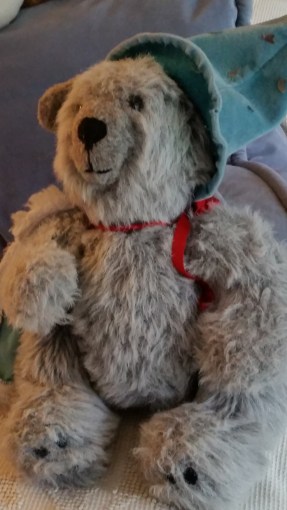
As children we are often told to be kind, to be sharing and giving, and to show our love to others by how we treat them. We are seldom told to care for or to love ourselves. I remember as a child sending for a nurse kit from Quaker Oats. It was advertised on a radio program I listened to every weekday. I liked the idea of being a nurse. It was a way to care for others, as I was told to do. After my little kit came I bandaged up my teddy bear and treated him to a hospital stay as I played nurse in my little white cap and apron.

As young people we feel invulnerable; we can go for a night without sleep and hardly notice. Unless we have allergies or some medical condition, eating whatever we like is the rule rather than the exception. We seldom need to sit and rest after exertion but can continue on as if we were made of steel. I was in my late forties when I began to realize I could no longer treat my body as if it were some kind of machine that could go on and on.

I began to notice that if I didn’t pace myself I would need to slow down or even stop in the middle of my efforts to get everything done. This bothered, even annoyed me. I didn’t like to stop. I wanted to do what I wanted to do when I wanted to do it. Then I had a real wake-up call: I got an excruciating pain in my neck and shoulder that wouldn’t go away. It took a number of chiropractic treatments and a lot of rest before I was able to move without hurting. The experience was extremely unpleasant. I finally got the message: I had been treating my body badly, and I needed to change my attitude.

First and foremost I realized I heeded to stop and rest between efforts. I also began to notice that when I ate certain foods I was uncomfortable; when I didn’t get enough sleep I was dragging. While this annoyed me, I had to admit it was important information. I realized that while it was strong and able my body needed a different kind of attention. Rather than treat it offhandedly as a machine that just needed fuel and occasional maintenance, I needed to treat it kindly, as if it were a faithful animal that was carrying me where I needed to go. I also had to accept its messages as needs and wants rather as impediments to what I wished to do when I wished to do it.

The importance of my self care grows with each passing year. Movement I used to take for granted has become an effort. There are even things I can’t easily do at all any more. But what is more important is that I remember to do what I need to do for my comfort as well as my health: Rest between efforts, meditate, take time to sit with my feet up, put in my eye drops, drink enough water, eat enough fiber, avoid what I can no longer comfortably digest. My list could go on and on, however I’ve made my point. Self care matters. More importantly, remembering to care for myself means I can continue to care for others, and that most of all is a good reason to do so.

Tasha Halpert

Lenten Discipline, Spiritual Discipline

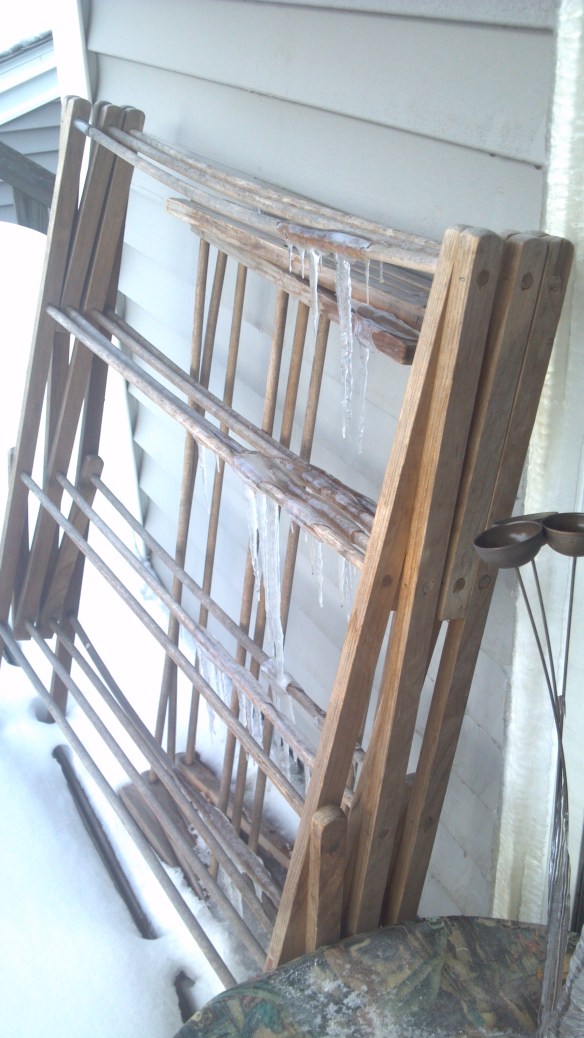
icicles-2Regardless of one’s spiritual orientation, self-discipline can be helpful to one’s personal growth. In the days before supermarkets or even grocery stores, for people in spiritual or religious communities or congregations to find enough to eat in the latter months of winter could be difficult especially in the six weeks before Easter. The Christian religious institutions of the day dedicated this time, known to Christians as Lent to the spiritual practice of fasting. From a practical standpoint, this extended what supplies remained. It also provided a spiritual bonus to do so. Making a virtue of necessity, the Lenten observances of the past centuries helped individuals get through the scarcity of food.

When I was growing up of course food was abundant. Fasting certainly was not a necessity. I was taught that the way to fulfill my Christian Lenten obligations was to give up something I might enjoy eating. I was told that fasting wasn’t just about going without a meal or not eating meat; it could mean giving up chocolate, or ice cream or sweets in general during Lent as a discipline instead of not eating meat on certain days or whatever else might be considered appropriate.

My great aunt Alice was a woman of character and community mindedness. She was a great believer in doing good and volunteered in a number of organizations as well as gave generously to charities. She had a different approach. She believed in taking on rather than giving up something during Lent. She would assume extra volunteer work or make a special effort at that time to visit elderly or invalid family members or friends.

I have come to believe that my Great Aunt’s idea of a good Lenten discipline is more meaningful as a spiritual practice than giving up desserts or candy. However, I am not one to visit the sick, nor am I usually involved in any community activities of a volunteer nature. Instead I believe that for me to fulfill the spirit of this period I can take on a practice of deliberate focus: to enhance my awareness of gratitude and of opportunities for me to give. I can become more mindful of my blessings, spend more time acknowledging the kindness of friends and family, and be more aware of whatever opportunities may present themselves for me to be kind and thoughtful to others.

Self-discipline can consist of an act of rigorous denial or of observing and then acting as might be appropriate. One can lead a spiritual life whether or not one has taken vows or lives within a specific religious or spiritual setting. If my Lenten practice becomes a habit or enhances my ability to be more mindful, that will do me more good than giving up candy. In the process it may also help me to be more aware of when I can do someone a kindness. By prioritizing these attitudes in my everyday life, I can enact a Lenten discipline that will do more good in general than simply fasting from anything I might enjoy eating.

A Valentine to Lost Loves

dscf0142

When I was eight years old my dear nurse, Emily left to get married. She had taken care of me since I was around eighteen months of age and was in most respects my second mother. She was a practical nurse. That meant besides looking after me, she helped with household chores as well as driving me where I might need to go. She was a devoted caretaker and when she left I missed her sorely. While my own mother loved me dearly, she loved me in her own way. Unlike Emily she was not a physically affectionate person. Also she had much higher expectations of me than Emily did.

When I was twelve, my friend and classmate Sally went away to boarding school. A bookish, unathletic, somewhat plump child, I had no interest in the things my classmates did, and neither did she. As a result from the third to the seventh grade we formed a team of two, and I defended her from the bullies that taunted her for her shyness. I missed her sadly. She lived in a big house by the ocean and our idyllic summers were spent swimming and playing tennis in her private court. Her freezer always held a tub of ice cream and we could make cones when we wanted. When we reached sixteen and I began dating, despite my efforts to remain close, we drifted apart. She had been my best and only friend. She remained distant.

Once I was married and had children I became friends with woman whose two boys were around the age of my two girls. We all went everywhere together. She had a wonderful voice and we used to sing folk songs at our children’s school. We even performed in a contest. Very close, we spoke on the phone almost daily. Then for some reason she became angry with me and disappeared from my life. For months I was devastated. Later on I had another friend I went to the beach with each day. Sadly, after several years she went back to Germany and never returned. By then I was beginning to learn what it was to lose someone I loved, and how to handle it; I was able to recover faster.

Throughout my long life I have had many opportunities to learn to live with loss. I had to come to terms with son’s death when he was twenty-eight, and as I grew older, my parents passing. More lately have come the deaths of others I loved. As time has gone on, these experiences have helped me learn to let loved ones go with a more peaceful heart. I have discovered that I do not need to stop thinking about them, nor do I need to regret their absence. I can take the images of them together with the memories of our time together and put them lovingly in a special album I keep in my heart. Then when I wish to I can open it, turn the pages and smile as I remember with joy the good times we had and the love we shared.

Tasha Halpert