 On the rare occasions when I have been without anyone to cook for except myself I found that I had very little interest in making my own meals. While I truly love to cook for my friends and my family, in my experience, it brings me been little to no pleasure to cook just for me. Lately, I haven’t had to deal with that problem, and while I hope I won’t have to in the future, if I do, I will try to think differently. This attitude may be why most if not all of the retirement and assisted living communities have food plans included in their fees, as well as dining rooms that serve up to three meals a day.
For most of us cherishing ourselves is not easy. It’s not something that comes naturally, and there’s a reason for that. While because they don’t know much about being an individual, very young children are naturally unselfish, once they learn to think of themselves as “me” most of their parents begin teaching them to share. “Sharing is caring” becomes a kind of guidance with which to approach both giving and doing. This is all very well until we begin to leave ourselves out of the sharing equation. It is vital to remember ourselves when we share. I am happier and more content when I include myself in my decisions and actions concerning others.
What can make us forget to do that is that often it feels better to give than to receive. Giving can even make us feel a bit superior to the recipient, a kind of pat on the head. It can also incline us to wish to be thanked or even to be given back to in some way. If or when we do not get a return on our gift, we may grow resentful. This then can create a feeling of martyrdom or even bitterness as in: “I did thus and such for them and got nothing back,” or “Look what I gave them and what did they give me?!”
If we cherish others at our own expense and forget to cherish ourselves, we do both the recipient and ourselves a disservice. It is not difficult to think of ways to cherish ourselves. However given that it may feel more virtuous to focus on others, it may also be easier to do so. Yet small acts on our own behalf can make a big difference. For instance: remembering to buy and prepare a kind of tea I like along with the one that Stephen prefers starts my morning happily. Remembering to ask him to join me in doing tasks or walking enhances my day.
My own small acts of kindness to myself, like taking the time to sit with my feet up and read a fun book for at least an hour a day, or occasionally stopping what I am doing and going out on the porch for a breath of fresh air make me feel good. I also appreciate it when I remember to do a bit of stretching or some exercise. When I discover a new pair of socks at my favorite online provider, or a pretty but unnecessary item of clothing in our local thrift store, I no longer feel guilty giving this to myself. Sharing means giving equally, not depriving oneself. If I encounter any guilt when I do something for me, I remind myself that I deserve to be cherished, and I smile and tell myself, “I love you too.”
 Dictionary definitions of “cherish” tell us it comes from words that imply caring and holding dear. The French word “cher,” or “cherie” meaning dear one is often used as a term of endearment, especially in Europe. That and those we cherish are what and whom we hold in our hearts as precious. Keeping, implying more than just a momentary affection, is another dictionary definition of cherishing. I was thinking of this as I contemplated Father’s Day and the memories I cherish of my late dad.
 In chilly weather, especially when snow or rain is falling, we welcome soups simmering fragrantly on the stove. However when summer is warming us up we don’t need more warmth to overheat us and salads get center stage. Heartier ones like pasta or potato salad are nice when the desire is for more carbohydrates, however protein is vital and is needed to balance them. One of my favorite go-to warm weather salads is made with chicken breasts, shredded.
 My parents taught me much by their example. My father served in many capacities as a volunteer. He was generous with his time, talents and energy. He read for a radio station that served the blind; for many years he held the position of treasurer for a non-profit orchestra; and he helped out in various capacities at the church to which he belonged.
 The Joy of Cooking is a popular cookbook. I have a well-thumbed copy, which along with my ancient Fanny Farmer’s form the lynchpin of my collection. Cooking has been my joy since I can remember being allowed to do it. My mother was born in Germany at the onset of WWI and the resultant lack of food she endured as a child made a lasting impression. She was reluctant to let me make main dishes–I was assigned to salads and desserts, so I had to learn how to make meals for myself. My cookbooks were and still are a great help.
 When we call our planet Mother Earth we are speaking the literal truth. Although our bodies grew inside and were birthed by a human mother, the elements that comprise it are derived from the substance of earth. The mother of us all, whether as individuals or collectively, is our planet. One of the names of our mother is Gaia. There are many who believe she is a living entity in which, along with every other living thing—animate or inanimate, we are cells.
 Though I am fonder of some than of others, for me every season has its unique blessings. Autumn has always been a favorite of mine because I like the crispness of the air and the vivid colors that paint the scenery. However, the cycle of the seasons produces different feelings in everyone and we all have our favorites. It may be that as a poet I am more sensitive to or pay more attention to the change of the seasons because I feel it so keenly. Winter for me is a time for rest and often for extra sleep. The dark hours encourage it. During the winter, like the bare branched trees and the hibernating creatures, I am less active and more inclined to quieter occupations.
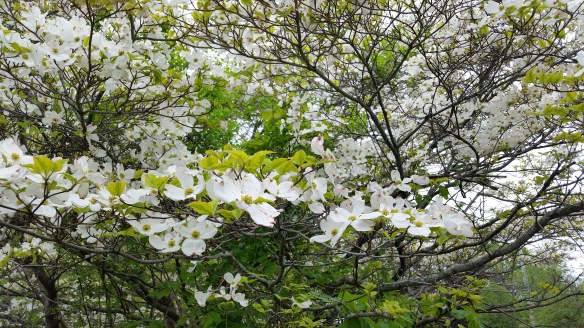 Spring arrives in a dilatory fashion. Like fall, it is a back and forth season. In addition, some years spring arrives early, sneaking up on us and forcing us to get out our warm-weather clothes much sooner than we think we are going to need them. In another year like this one, we begin to feel weary of our winter wardrobe and yearn for the spring clothes still put away in closets or storage places. There is no telling when the weather will change. Spring is a fickle season, whether daily or yearly. I have written a lot of poetry about the way spring behaves.
 Pujakins