Being Kind to our Mother the Earth

Maple tree Celebrating SpringWhen we call our planet Mother Earth we are speaking the literal truth. Although our bodies grew inside and were birthed by a human mother, the elements that comprise it are derived from the substance of earth. The mother of us all, whether as individuals or collectively, is our planet. One of the names of our mother is Gaia. There are many who believe she is a living entity in which, along with every other living thing—animate or inanimate, we are cells.

As her children it behooves us to treat our mother the earth with respect. Not everyone looks at Earth this way. Some believe that humanity is privileged and can take what ever they wish from her substance for their own benefit. They do not treat our mother with respect. Taking advantage of her bounty they use it without regard for its possible limits or parameters. Pollution by virtue of pesticides, over fishing, strip mining, and other common practices injure the health of our planet. People who respect their mother do not act in ways that cause her harm.

Individuals who care can make a difference. Daily acts no matter how seemingly small and insignificant, can accumulate. There is a true story to the effect that when the majority of monkeys isolated on an island began washing their food that the practice spread to other islands, communicated somehow through a sense of consciousness. It is said that when enough people act in certain ways that it can influence the actions of others even without their seeing or hearing of it. We need to think about actions of convenience to us that may mean we are taking advantage of our mother earth.

If I leave the water running when I brush my teeth I won’t need to turn the faucet on and off, yet that wastes water. If I take the car somewhere within walking distance, let it idle unnecessarily, or speed when driving I waste fuel. Many of the shortcuts we practice in order to save time end up being bad for the planet. Many towns are banning the use of throwaway plastic bags. They are easily replaced with reusable cloth or disintegrating paper. I just need to remember to take my cloth bags from the car.

Doing things the easy may be hurtful to our mother earth. When did we become accustomed to always drinking from plastic straws? The ocean now is polluted with them! What ever happened to paper ones? Repurposing what may otherwise be thrown away is another way to be kind to the environment. The internet is a good source for ideas for this together with how to accomplish it. All forms of recycling are helpful to our planet. I would not be surprised if in time to come we mine our land fills for the durable materials once discarded now to be found and recycled from there. I can also help by picking up trash when I go out for a walk–and the bending is good exercise. On Mothers’ Day and always I am working to remember to be as kind to my Mother Earth as I can be.

Spring is a Time for Awakening

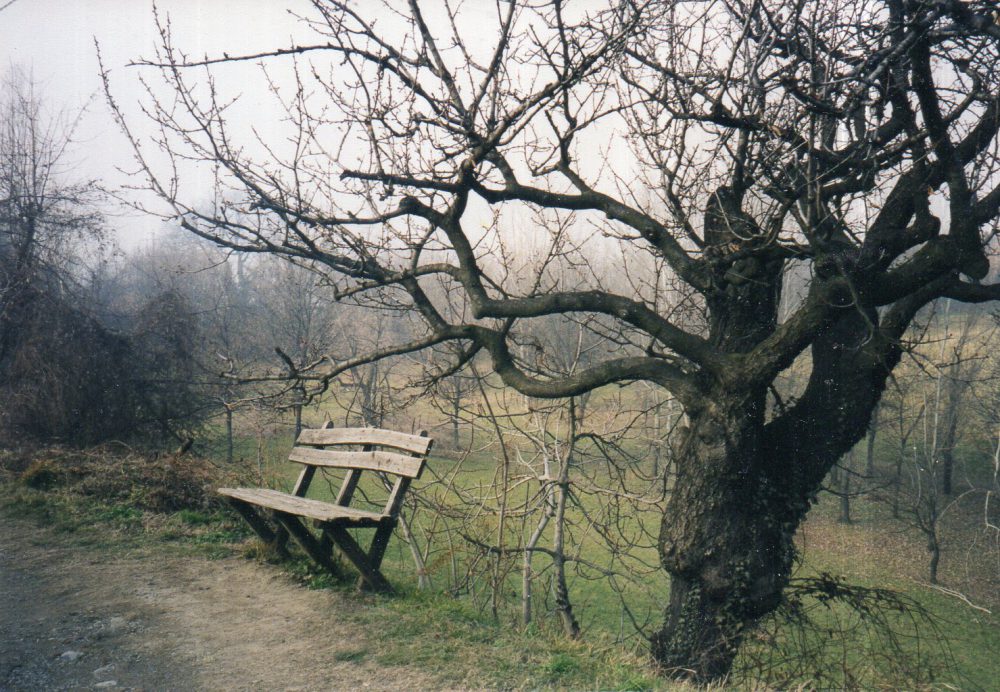
Maple ree flowers and leaves 1Though I am fonder of some than of others, for me every season has its unique blessings. Autumn has always been a favorite of mine because I like the crispness of the air and the vivid colors that paint the scenery. However, the cycle of the seasons produces different feelings in everyone and we all have our favorites. It may be that as a poet I am more sensitive to or pay more attention to the change of the seasons because I feel it so keenly. Winter for me is a time for rest and often for extra sleep. The dark hours encourage it. During the winter, like the bare branched trees and the hibernating creatures, I am less active and more inclined to quieter occupations.
It’s easy to sleep late in the winter. The light does not come through the curtains until morning is well advanced. Chilly weather does not encourage leaving warm covers for frigid floors. Yet as the light hours grow longer and the dark ones shorter, the day calls to me sooner and sooner. Reluctant as I may be to get up from my bed, it becomes less alluring to linger than to rise into the day. Even as the trees and the birds greet the brightening weeks, with the spring, something in me begins to wake up.

Winter encourages me to make soups and stews. My pantry and refrigerator are stocked with warming foods. With the advance of spring I think more about salads and lighter meals. I toss the cold weather recipes that I have accumulated yet not found time to make and clip out more recent ones geared to fresher, less sturdy meal components. Now that I can see it, when I look around at the winter dust on shelves and surfaces, I feel more diligent about eliminating it. Somehow when I can’t see it, it is so much easier to ignore. Now it no longer is.

When I was out and about, my eyes had become accustomed to bare trees sleeping in the cold. All winter I admired the still shapes of the bare branches against the sky. Now as the trees blossom and leaf out, they seem to be dancing with joy. The spring breezes flutter the trees’ new emerging clothing as they dress themselves in their fresh spring wardrobes. When I go about my errands, my heart sings along with the turning wheels of my car.

When I used visit my daughter in Italy, she would come into my room of a morning to waken me from my jet-lagged sleep. She would open the curtains and turn to me as I clung to my pillow. “Wakey, wakey,” she’d say with a smile. Finally I’d open my eyes and greet the day, glad to be awake and alive, ready for a new adventure. Spring feels like that. It is time to pursue the new, the untried, the innovative. Time to put away the darker, heavier winter clothes and put on light, bright colors and fabrics, to free the feet of boots and don sandals. Time to awaken to the new season and to rejoice in it.

Rejoicing in the Advent of Spring

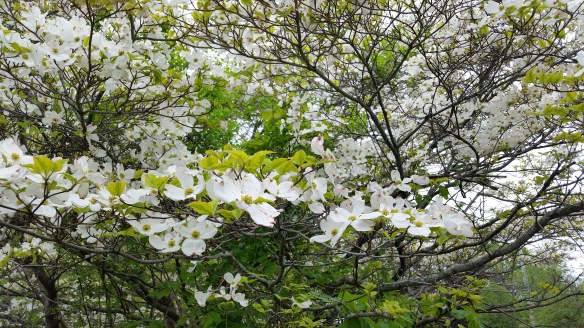
dogwood blssoms 2Spring arrives in a dilatory fashion. Like fall, it is a back and forth season. In addition, some years spring arrives early, sneaking up on us and forcing us to get out our warm-weather clothes much sooner than we think we are going to need them. In another year like this one, we begin to feel weary of our winter wardrobe and yearn for the spring clothes still put away in closets or storage places. There is no telling when the weather will change. Spring is a fickle season, whether daily or yearly. I have written a lot of poetry about the way spring behaves.
I am fond of fall. I have written a lot of poetry about that season also. It is actually my favorite of the four. As it begins I delight in the cool crisping of the air, especially welcome after the moist heat of August. However, fall does not have the same kind of excitement to it that spring does. Fall colors are loud and obvious. The autumn brilliance blares from the hillsides like the brass in an orchestra. Spring is delicate; violins and flutes, with an occasional clarinet announce the softly evolving colors that slowly permeate the landscape. Where fall is blatant, spring is subtle.

These days as I drive along the roads between towns I enjoy watching the ends of the tree branches slowly green and redden, highlighting their tracery against the sky. There is a maple outside my bedroom that’s the first thing I see when as I open the curtains. Lately I have been watching the ends of the twigs turn green and then begin to unfold into maple flowers. I know these will in turn eventually fall and produce the seeds we call maple keys. Do children still peel the ends open and stick them on their noses as I remember doing?

Spring is an opportunity to get out and enjoy a walk. It is a treat to amble along the sidewalks of my town’s neighborhoods and see the flowers springing up in the gardens around town. Daffodils and jonquils, hyacinths and tulips abound with their lovely colors. The magnolia trees with their glorious pink and white flowers along with the dogwoods that come into bloom make me feel almost giddy with their generous bouquets of blossoms. How happy the bees must be to put an end to their long winter nap and emerge into activity.

The blooming of the lovely spring trees and flowers is also apt to stir up allergies in those who are vulnerable to them. This makes the spring season a lot less pleasant for some. Stephen and I have been fortunate to have the help of homeopathic remedies that alleviate the discomfort and sometimes even eliminate it. Still, the loveliness of the season may be some consolation to allergy sufferers. I am so glad to see the arrival of spring. Early or late no matter how long it has taken once it gets here all is forgiven, winter is forgotten, and we can rejoice in the glorious beauty of spring.


Befriending Ourselves

Bridge reflected

For the most part very young children are naturally generous. This may be because they do not yet have a strong sense of individuality or perhaps because they feel others will enjoy what they find tasty or enjoyable, whether a cookie or a cherished plaything. Later on they lose this openheartedness and fight to keep what they believe is theirs. At this point most parents teach them to be polite and sharing. This lesson becomes a kind of inner imperative that guides us as adults. We learn to feel better when we obey this inner morality and as a consequence often end up depriving ourselves in favor of giving to others.

When was the last time you bought yourself a present—not something practical but something you wanted and didn’t think you ought to spend the money for? You might even have recently bought a gift for someone else that you would have liked to give yourself, and yet didn’t quite dare to for fear of your own disapproval. Most of us have been taught to think of others before thinking of ourselves. While that is a nice way to behave it often leaves results in making us feel deprived or at least somewhat resentful.

Giving to others is praiseworthy. Depriving ourselves to give to others is not. It often results in our feeling the other person ought to be more grateful than they may be…especially if the other does not know how you sacrificed to do that. The reason we too often give to others at our own expense is that it feels nicer to do for others. It gives us good feelings because we’re acting in accordance with what we feel is the right thing to do. But is it? I believe it is important or even necessary to treat ourselves as we would a friend.

Long ago I met and studied with a teacher that taught me about this. It was the beginning of a friendship between myself and me. I learned that if I listened to a wee small voice inside me I would receive true guidance toward correct behavior when it came to giving to or acting for myself. I am not speaking of being selfish or self-centered. There is a big difference between befriending oneself and spoiling oneself. I do not believe in self indulgence to a point of neglecting others, only in being fair about the balance between giving to others and giving to myself.

The real key here is that balance. I can tell when things get out of balance because that inner voice will cry out in pain or sorrow. I may feel neglected or ignored even when I am actually not. Learning to hear that inner voice requires giving up the righteous feelings I get from self-sacrifice and instead asking myself what I really want to have or do instead. I can ask myself if is this how I would treat a friend? The answer comes as a knowing or an understanding. Then my actions are guided by what is good for all concerned including me. When I am my own friend I treat myself the best way I can, and I am happy and content.

The Preciousness of Remembering

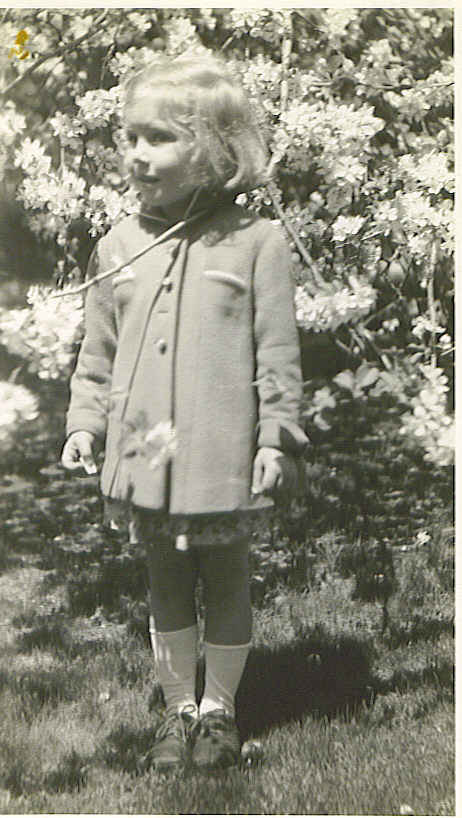
When I was a child Little Tasha 4and death or even disaster was to be spoken of, someone would say, “Not in front of the children.” The subject would be changed or I would be told to go off and play so the adults could continue their discussion. Yet because we had animals, death and change were part of my life. I witnessed the drowning of baby ducks and the demise of baby chicks. It was hard when a dog got into my pet rabbits’ pen and maimed them. My aunt’s gardener had to–as I was told, “put them out of their suffering.” Death was no stranger to my childhood. I am neither uncomfortable with it nor afraid of it.
Still, it does have an effect. The recent passing of a dear friend has brought a sense of immediacy to my relationships, and prompted a renewed sense of attention to my way of thinking about life. She and I used to speak each morning except Sundays. More than once I said to Stephen, “One day the phone will not ring at 9:30 every day.” Then indeed that day did come. While I miss my friend, I know she is in a much more comfortable and happy place than she has been for some time. Though I do miss her calls I also rejoice for her.

I am happy to have pleasant memories of our time together. That is the saving grace of partings. It is also a reminder to focus when I am with a dear one and to be present in order to have something to remember. More and more as I get older I have come to realize that endings come whether we want them to or not. We have no way of knowing whether or not any given conversation, meeting or interaction with another may be our last. I do not say this because I have a morbid fear of endings but rather as a reminder that any time we spend with another may be significant.

When we are children we have no understanding of how it is that things change or perhaps end. That ignorance may even be important to children’s comfort and sense of security. Most adults grow accustomed to change and learn to flow with it. It may be an aspect of maturity in human beings to be able to do that. In my life there have been many changes I could never have anticipated. Being able to adapt to them has been crucial to my happiness. Developing a sense of detachment to an anticipated condition of permanence has been not only valuable but also essential.

When I was a child, I could buy an ice cream cone for a nickel. Now even the smallest one costs 50 times that. The decor in my parents’ living room changed once in my memory. Today many people redecorate frequently. Then divorce was rare, people stayed at the same job for most of their lives, I could go on and on about how it used to be. My point is that change is more than ever a constant in most lives. For our comfort it is important to be able to deal with all forms of change, whether of décor or of circumstances. When I make the time to focus my attention and to appreciate what is happening, whether with a relationship or an experience, I have much less regret when it ends.

Intentions, Resolutions and Reminders

Dead Branches and reflections 2

Growing up I was somewhat clumsy and awkward. I was always tall for my age—I stopped growing at the age of twelve and was even taller than most of the boys in my class, who soon outgrew me. My parents also thought I was careless. I wasn’t really, just lacking in experience. I also had poor proprioception. That word defines an actual sense: awareness of where one is in space and how much effort is being put out. I once embarrassed myself dreadfully when my best friend’s mother asked me to help her set the table, by pulling it completely out of the sideboard and dumping its contents on the floor.

While I outgrew the awkwardness and with the aid of yoga even became quite graceful, I still struggle with the proprioception. However I found that mindfulness helps greatly with that. Centering myself, slowing down, and practicing deliberate awareness when I am moving around or even pouring water from a pitcher into a glass, is a must. Over the years I have tried to make this a habit, like washing my hands with frequency, especially lately.

The flu season has made it vital to remember to wash my hands each time I return home, especially when I’ve been touching things like Grocery cart handles, restroom doorknobs and even counters or tabletops. The other day in a restaurant a woman near us was coughing with frequency into her hand as well as into the air around her. We are told that washing hands well is more effective than using sanitizers and better for our health.

I learned this the hard way. Last week I picked up a germ that invaded my sinuses and hit my right eye causing me great pain and rendering me unable to read for any length of time. As a result I have strongly resolved to wash my hands carefully not only when using any restroom but especially immediately upon arriving home. I hope to avoid not only the flu, but any other germs.

Resolutions are better kept when we have a reminder to do so, and a deliberate intention is well bolstered by any negative experience that happens when we haven’t. Hand washing is now an imperative for me, and while I regret the suffering and pain of my illness, I am grateful for the positive reinforcement of my intentions. Powerful reminders are not always pleasant, however they certainly are useful. Making lists helps too. Without a list my intentions, let alone whatever I have resolved to do may be forgotten.

Getting older has its good and its bad aspects. Becoming wiser by virtue of experience is helpful. Becoming more mindful as a result of that experience helps greatly also. On the other hand, becoming forgetful is a nuisance. However, my lists do help considerably. The trick is to remember to write things down and then also to look at the list. When I was a young parent in order to stay on top of things I had to outwit my children. Now instead in order to stay awake and aware I have to outwit myself.

The Gift of Christmas Giving

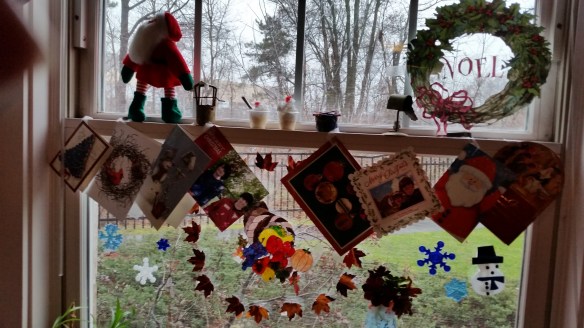
Laura Dodge's Christmas windowOne of my fond Christmas memories is of my dad sitting by our living room fireplace wrapping and addressing his Christmas gifts to his workers and others with whom he had a working relationship. He was a horticulturalist and his company was on the North Shore where there were many fine estates and special gardens. He was good at designing views and helping the owners of the estates and their caretakers maintain their trees and shrubs.

His gifts ranged from cartons of cigarettes to bottles of whiskey and included neckties and other smaller items of clothing. Some were for the gardeners of the estates, some for those who worked under his supervision. His men and their foreman got the more expensive gifts. Each one was carefully wrapped and labeled. When I grew old enough to help him I delighted in doing so. All things having to do with Christmas have always been special to me.

Many years ago, on the advice of a spiritual teacher, I began cultivating an attitude of gratitude. This practice has since become much more popular, featured in books and by Oprah, on Facebook groups and on a variety of other sites. There is even a lovely, inspiring site devoted to the expression of gratitude called Gratitude.org. It features all sorts of good news together with thoughtful comments and teachings, as well as poetry.

As Stephen and I drove home after delivering the last plate of Christmas gift cookies, I thought how grateful I was to have an opportunity to acknowledge as my dad did, the kindness of those who had been of help. My token plates of cookies seem a small return for all that these people have done for us, yet they are at least a tangible offering on the alter of my gratitude.

Also, since I was a small child I have been the recipient of much for which I am grateful now, even though at the time I was not aware of the benefit. When I have the opportunity to do so, I acknowledge in my heart those who have been kind to me in the past as well as in the present. Some of them have passed out of my life and some have simply passed away. I remember them with gratitude and say a prayer for their happiness wherever they may be.

Thanksgiving is a fine time to be aware of that for which we are grateful, yet Christmas is my opportunity to express that gratitude in a tangible way to those whose generosity I hope to acknowledge. My life would not be what it is without the help I have received along the ways Those who have in the past, those in the present and even those in the future deserve my thanks as well as whatever I can do to pay it forward in gratitude for those who are too far for me to bring them cookies.


Giving Love at Christmas

Love for Christmas Giving

My mother wasn’t much for cooking, though she considered it her duty to serve us good, nourishing food. I don’t remember her ever baking anything sweet. She didn’t care for desserts; she considered them unnecessary and fattening. When I was old enough for her to trust me in the kitchen, she encouraged me to bake simple items like brownies or other easy recipes. Unlike her I truly enjoyed cooking and was happy to make what she permitted me to.

Once I had a family to bake for I broadened my repertoire and learned to make pies and cakes as well as cookies. However cookies were my favorite to make because they went farther. I used to count and divide up the cookies and each child knew what they could have. Because I was home with the children anyway, it was fun to try different recipes. Eventually I created a small Cookie Cookbook with my favorites that I still use today.

Although my family is grown and I no longer bake cookies regularly, every Christmas I make up several batches and create plates to give people who have been helpful or kind to Stephen and me in the past year. The newspaper delivery people who bring the newspaper to our floor, the ladies of the library where we take advantage of their services all year long, the fine gentlemen of the garage where we take our car for repairs and upkeep, and a few others I want to acknowledge for their kindness.

Favorite cookie recipes I usually make include my Disappearing Caramel Brownies, Jiffy Jam Delights, and Unexpected Company Bars, all reliable and relatively easy to make recipes. This time of year there are cookie recipes everywhere to be found, and while these are my personal favorites for giving, those with more time and energy than yours truly might make cut out cookies to decorate or even more fancy treats. If you want one of my recipes, please let me know which, and I will email it. To my way of thinking however one wishes to express love is valid. Spending time on a gift is one of my favorite ways.

While feeding people is one of the ways I use to express my love, I also appreciate recipes that take less rather than more time, yet still provide delicious tasting healthy food. I also collect recipes from others when they have something unique and special to share. Sometimes they even write them out for me. I have loose leaf notebook where I keep these, along with others. Within its plastic sheeted pages are pressed their treasured, handwritten pieces of paper.

The following recipe wasn’t written out by my late friend because it was so simple. Avocado and Grapefruit salad requires one grapefruit and one avocado per two people, so if you are serving a family you need to double or triple, depending. Think kind thoughts as you peel and section grapefruit, removing membrane and preserving juice. Cut in half, remove seed and section one avocado into slices. Combine all, add a tablespoon or two of a good tasting olive oil, stir well, chill slightly, and serve with love for the holidays or at any time at all.


The Wonderful Jacket

Tasha in hood 2Those of us who come from New England are familiar with Yankee thrift: use it up, make do, or do without. I am of a conserving nature, having in addition to a Yankee father, a German mother born at the outset of WWI. Nothing was ever wasted in the house I grew up in. I thrived on hand-me-downs and thrift shop finds. Over the years I have accumulated clothing items I am happy to see again when their season rolls around. I often develop a fondness for clothing that has served me well.

Recently as I pushed my wagon through the aisles of a grocery store, I saw a woman standing by the meat counter in a unique and lovely white furry jacket. “I can’t resist telling you I think your jacket is magnificent,” I told her. She laughed and said it was from the 70’s, yet she could never bear to part with it. “Nor should you,” I replied. We each continued on our way, pushing our shopping carts in opposite directions.

I smiled to myself. I was wearing a jacket I have had for close to thirty years. It is a fairly ordinary, black, nylon one, with some very useful pockets. Black fur edges the hood. It is warm and comfortable, and probably unremarkable as jackets go. However the story of how I acquired it and what has been done to it since makes it special.

On a trip to the Cape many years ago, Stephen and I were in a consignment shop, poking around. I saw the jacket hanging on a rack, and figured I might be able to use it. I took it down, intending to try it on. “If you can zip it up you can have it,” said the woman behind the counter. I looked down at the zipper and saw that it was slightly frayed on the bottom and could be a bit challenging. When I tried it on I liked the feel of the jacket and resolved to see if indeed I could zip it.

Very carefully I inserted the frayed end into the metal slot and continued to be careful as I zipped it all the way up. The saleswoman was good at her word and gave me the jacket without charge. In the ensuing years I went on zipping it up carefully until finally one year I invested in a new zipper. Along the way parts of the jacket lining began to wear out. I was fortunate in having friends who at different times were able to repair the worn places in the lining so that it looked almost new.

Now when I put on my wonderful warm winter jacket I remember my friends and their generous work on my behalf. I also think how fortunate I was to have found it, been able to zip it up and to have it still after all these many years. What keeps me warm in it is more than the lining or the material, it is the memories and the love of friends that has been sewn into it. How could I ever part with this jacket? I believe I never could, nor do I ever wish to.


The Dark Time is The Ideal Time to Rest

The trees outside my window have lost most of their leaves. Some few still cling to their branches as a result of the late warm weather, however not many. The leaves are being released from their branches. The tree has sealed off the part where the stem contacts the twig and the leaves are subject to the whims of the wind. Thus the trees move from active participation in growth and expansion to rest and restoration, solidifying what has been gained. Nature is sensible that way, bringing opportunities for alternative modes of being. Most animals as well as insects are in their burrows or nests, resting from the work of gathering and consuming food as well as maintaining the dwelling.

Once there was no electricity to keep us humming along 24/7. In many cases native peoples in the North went into quasi hibernation mode in the winter. Later, although torches and candlelight provided evening illumination, early bed times were likely. Judging from how I feel, the human body seems to be inclined toward seasonal rest. I always seem to sleep longer and even more soundly during the darker hours between November and February. I find that my body is happy with the additional rest. However I am fortunate that I do not have to answer to a time clock at work or an alarm clock at home that tells me I must rise and get moving regardless whether or not my body would prefer to stay under the covers.

We humans do love the light. Throughout history various cultures have provided and still do provide their own opportunities to invoke it during the dark hours. In our Western European culture, our holidays devoted to light in one form or another commonly include Halloween, Thanksgiving, Christmas and New Years. Hanukah comes to us from another part of the world, as does Kwanzaa, a recent addition. The Internet can provide information concerning the many other celebrations of light that are not as common now because they have faded or been forgotten. These include interesting customs—some of which have come down to us, that include all kinds of symbolism as well as special dances and other activities. All these opportunities help counter the inevitable lethargy brought on by the dark hours.

Although I do not count the years, I still celebrate my birthdays. Now I have another celebration coming up, and I am reminded that as a result of the numerous autumns I have lived through, the leaves of my days are indeed falling. Little by little they flutter down, gathering on the ground in colorful heaps. I have also noticed that as the days of my life increase, I am slowing down. I do not get as much done; I need to rest more. Sometimes this is frustrating. These days are precious and the daylight needs to be made use of. Still I need to be kind enough to myself to allow for the rest I need to keep up my strength, most especially as the days of autumn dwindle and the dark hours grow longer.