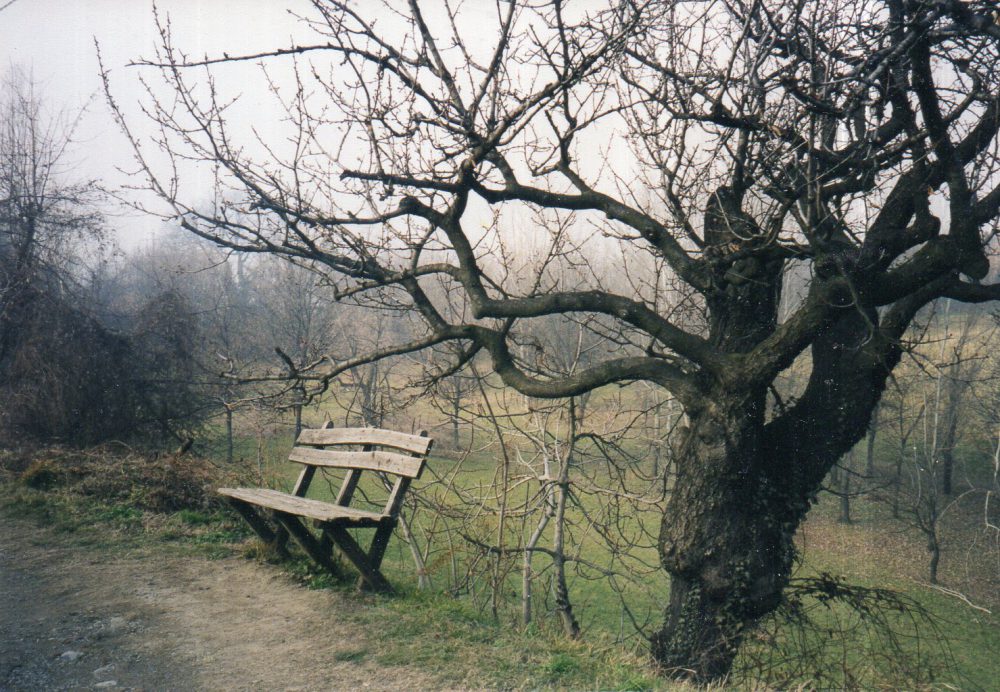
Heartwings says, “When something is outgrown, it must be left behind.”
I continued to go to church with both my mother and my father, until I went to college. At that point I went only when I was home and the rest of the time, I didn’t think much about religion or spirituality. I was busy growing in other ways, and then I met and married my first husband. We started a family, and soon with two little girls to care for, I forgot about my pursuit of spiritual matters.
Then my husband fell asleep at the wheel as he was driving home one night and nearly was killed in an accident. All of a sudden, I felt an urge to return to church. Yet I did not feel good about attending my mother’s church or practicing her religion. It simply did not suit me any longer. Like the clothing handed down from my mother’s friends’ children that I had worn as a child, it no longer fit. I looked for one but didn’t and then we moved back from Rhode Island and the army base where my husband was stationed. I found myself able to attend my father’s Episcopal church and did so, singing in the choir and eventually teaching Sunday School. I felt as though I had come home.
Beginning with The Hero with a Thousand Faces, I read Joseph Campbell’s wonderful books on mythology. They broadened my view of spirituality and I continued to search for books that would help me learn and grow. Someone gave me Brother Lawrence’s Practice of the presence of God. I was quite taken with the idea and decided to incorporate his practice of the Presence of God into my own life. I began by imagining that God was present for me where ever I was.
Brother Lawrence also introduced me to the idea that any kind of work could be a form of prayer. Until then I had associated prayer primarily with church, bedtime, and emergencies.
Over many years I have come to understand more about the practice of work as a form of worship as well as of spiritual growth. Here is a tale that says more about that. This Hindu legend tells of an advanced student of spiritual wisdom who was sent by his master to visit a renowned teacher on the other side of a forest. He grew weary, sat under a tree and fell asleep. The twittering of birds woke him. Angrily he raised his hands and sent a bolt of energy at them. They fell senseless to the ground. He continued to the hut of the teacher and knocked on the door. No one answered. He tried again. Someone was moving about inside. “Anyone there?” he called out impatiently and knocked a third time.
“Young man,” came a voice from within, “I am only an old woman who has lived all my life here in the forest. You have studied great books, and you are even strong enough to knock the birds from the tree, but you will have to be patient with me. I am getting to the door as fast as I can.” The young man caught his breath. How could she possibly know what he had done in the forest? Realizing how much he still had to learn, he bowed his head and sighed.
Over many years, my understanding of this practice changed. Now I feel it is always possible to be in the presence of God. If, as Brother Lawrence teaches, God is present everywhere in all people and things. How ever could I not be in that presence. Most think of prayer as a statement, in the form of a petition or perhaps a combination of praise and gratitude. For me prayer has become an underlying theme so that I frequently express my gratitude. Also, when a friend comes to mind, I bless him or her and send light to whatever situation he or she might be in.
May you find help on your path to light when and where you need it.
Blessings and best regards, Tasha Halpert
To be Continued
A poet and writer, I publish a free weekly blog, Heartwings Love Notes for a Joyous Life. My Books: Up to my Neck in Lemons, and Heartwings, Love Notes for a Joyous Life are available on Amazon. My latest publication available there is my first chapbook, Poems and Prayers, and I have two more in preparation. You can sign up for my blog at http://tashasperspective.com.
 On the rare occasions when I have been without anyone to cook for except myself I found that I had very little interest in making my own meals. While I truly love to cook for my friends and my family, in my experience, it brings me been little to no pleasure to cook just for me. Lately, I haven’t had to deal with that problem, and while I hope I won’t have to in the future, if I do, I will try to think differently. This attitude may be why most if not all of the retirement and assisted living communities have food plans included in their fees, as well as dining rooms that serve up to three meals a day.
 Dictionary definitions of “cherish” tell us it comes from words that imply caring and holding dear. The French word “cher,” or “cherie” meaning dear one is often used as a term of endearment, especially in Europe. That and those we cherish are what and whom we hold in our hearts as precious. Keeping, implying more than just a momentary affection, is another dictionary definition of cherishing. I was thinking of this as I contemplated Father’s Day and the memories I cherish of my late dad.
 and death or even disaster was to be spoken of, someone would say, “Not in front of the children.” The subject would be changed or I would be told to go off and play so the adults could continue their discussion. Yet because we had animals, death and change were part of my life. I witnessed the drowning of baby ducks and the demise of baby chicks. It was hard when a dog got into my pet rabbits’ pen and maimed them. My aunt’s gardener had to–as I was told, “put them out of their suffering.” Death was no stranger to my childhood. I am neither uncomfortable with it nor afraid of it.
 At the time I was born my mother was newly come to the US, a bride of less than a year. Except for my father, she was very much alone in a big city, and I was her only companion for quite a while. I have often thought that my persistently positive perspective on life may have had its roots in my trying to cheer her up when she was sad and missing her family and friends back in her home country. Over the years since I have come to understand the power of a positive perspective on a potentially negative situation or experience.
 When my mother and I went to Russia in 1991 among the places we visited was the Hermitage Museum in St. Petersburg. It was very impressive. My favorite part was the room with six Rembrandts. Sitting among them was an extraordinary experience. As we left we bought some postcards and other souvenirs and when none seemed to be forthcoming, asked for a bag to put them in. The cashier gave us a sour look then finally dug out a used plastic bag– an obvious treasure from her hoard and placed our items in it. Recycled bags were more common there than new ones were then.


 Pujakins