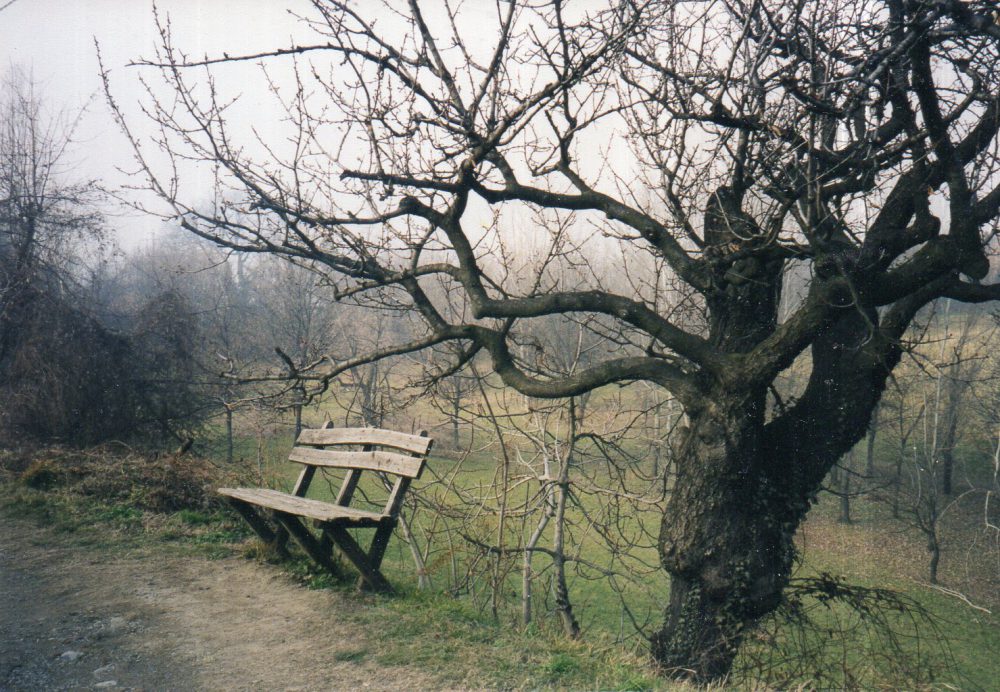
Heartwings Love Notes 2038 Precious Moments

Heartwings says, “Memories are fun to rummage through, and can be entertaining.”

I don’t use my cell phone often. Usually when I do, it’s to text one of a few friends to share with or for communication with family. So recently, when it rang with a number I didn’t recognize, I figured it was spam. I picked it up and found that it was a call from my grandson inviting us to visit on an app called Face Time. He lives with his wife in Saudi Arabia and he wanted to share his infant son, now four months, with Stephen and me.

Such precious moments are pages in my mental memory album. Some days they show up unbidden to help me recall a time and a place from the recent or even the distant past. One day I had an image of me in my skates, wobbling on a patch of frozen water in a wetland on my Great aunt’s property. I’m around eight years old and I’m wearing my snowsuit with its cute bonnet tied under my chin.

The feeling of the thick woolen snowsuit with its accompanying snow-pants comes back to me, the vivid memory expanding as I think about it. Nylon outerwear and lightweight winter clothing was in the future. Such memories are fun to enjoy and help me recall a childhood spent outdoors. As long as the weather was neither windy or too cold, I was appropriately dressed and sent out of doors to play among the trees and open fields of the property.

Recently I recalled how after there had been a great storm, a large section of a tree trunk, perhaps three feet in diameter and four or five long appeared in the wetlands we called a swamp, though by today’s standards, it really was not. I was delighted to see it and it became part of my fun, serving as a kind of home for small things. I played “house” a lot of the time. Then I found something really special. It was a pane of glass, not chipped, cracked or imperfect in any way, with blue and gold painted around the edges.

As I reflect on it now, it seems to me it was probably part of a picture frame, but then it was a magical item to be cherished and admired, a treasure given me by the sea. It became part of my log home and cherished accordingly. Then one day there was another great storm and when I went to where it had been, the log and the pane of glass were both gone without a trace. I was a bit sad, but soon went on to find other playthings. Still the items remain, standing out in my memory of my childhood spent outdoors in nature.

I know now how fortunate I was to have this special time growing up. So many children do not have that experience. Nature is such a fine teacher. Her school provides a lifelong experience that surpasses anything a computer or a cell phone can provide.

May you have recollections to enjoy from time to time

Blessings and best regards, Tasha Halpert

PS Love to hear your reminiscences, and hoping you would like to share. Please write me at tashahal@gmail.com, and sign up here at my blog to get more Love Notes at http://tashasperspective/pujakins.
Heartwings Love Notes 2023 Love is the Answer

Heartwings says, “Love is alive when another is cherished with loving acts.”

Earlier in this lifetime, at the age of eighteen, I met my children’s father. It was at a dance in February, a week or so before Valentines’ Day. I was quite taken by his good looks and ardent personality. Wanting to send him a valentine card, I checked out several stores that sold them. To my dismay, none of them had any valentines I liked.

In desperation, not wanting the day to pass without some token of affection, I purchased a humorous one. Unfortunately, I didn’t pay enough attention to what the comment said. My sending that card almost ended the relationship right then. After all these years I do not recall the words, only what happened. Fortunately, my new boyfriend and eventual first husband had a good sense of humor, and soon we both ended up laughing at my gaffe.

Long ago there was a tradition of snide or uncomplimentary valentine cards. Less popular today, they seem to be almost altogether a relic of the past. My home town of Grafton is close to Worcester, the city that claims to be the manufacturer of the first US Valentines. This was around 1800, and continued onward, the cards becoming more elaborate and even more popular when postal rates went down.  Comic, or vinegar valentines such as the one I ended by using, were first created in 1870 by John McLoughlin a New York printer. They sold for a penny and were sometime called penny dreadfuls.

It is on Valentine’s Day that the second most cards are sent, Christmas being the first. At one time I made all my own valentines, and took great pleasure in doing so. When I was in grade school, we exchanged simple, inexpensive valentine cards, and often the teacher brought in cookies, often heart shaped or with frosting. My mother discouraged sugary sweets, so that was a treat to remember.

In this world of grim news and tragedy, love of every kind is even more important than ever, and a day devoted even principally to romantic love is special for its message. However, more than that, love is the answer to many situations and questions, especially “what can we do?”

Sending and receiving love of all kinds is vital to help change the world to a kinder, friendlier, more compassionate place to be. The more love that is expressed, accepting, filial, amorous, healing, and more, the less there will be of its opposite: judging, shunning, ignoring, disapproving, and more.

A wise teacher of mine once told me, “You don’t have to like everyone, but you must love everyone.” This may be difficult to do, especially with those individuals who seem to be bent on destructive behavior, yet one can feel compassion for them, one can wish them to wake up and change. Love, in whatever form is often the answer to many difficult situations, and a day devoted to it is a joy to the heart, whether or not any valentines are sent. 

May you honor Valentines Day however you wish, with love.

Blessings and best regards, Tasha Halpert

PS Do you have any reminiscences to share or happy memories of valentines? I would love to hear about them. Readers’ email is a joy to my heart. Check out my blog at http://tashasperspective at Pujakins/from the poets heart. You can read past Love Notes there and sign up to receive them weekly in your in box. 

How Much Is Enough?

20180829_104856           When I was a young wife in the fifties, my father helped us buy a house in the small town where I had grown up. Just outside my kitchen door was a garbage pail sunk into the ground. I would step on the lid, dump in my orange peels, potato peelings, stale food, etc. and once a week a man would come by with a big truck, pull out the bucket, empty it into his truck, and along with all the other garbage he had collected, take it to feed his pigs.

His piggery was deep in a wooded area and the smell bothered no one because it was quite isolated. I expect that today his pig farm would have been deemed unsanitary and done away with. Then it fitted in with a more appropriate attitude of the time of waste not want not. It made a good thrifty use for what otherwise would go to waste. In those days there was a more sensible attitude toward what we have and what we need, or so it seems to me. The Covid 19 crisis seems to have exacerbated a prevailing need to have more and more.

Not long ago people were treating toilet paper as if it were about to vanish from the earth. One person even spotted a woman loading her SUV with an entire tray of rolls from a Walmart. Other items vanished from shelves as people reacted out of fear of lack. How much I need is one amount. That need springs from a logical, rational approach to having. How much I want may stem from a fear of loss, a desire to own more than I already have, plain greed, or envy driven by a competitive nature.

Need and want are such different conditions. Operating from an awareness of need is different than operating from a feeling of want.   I once read a story told by someone waiting in an airport who overheard a mother and daughter saying goodbye to one another. As they embraced, she overheard one say to the other, “I wish you enough.” The other replied with the same words. At first it seemed a curious thing to say for a farewell. As I reflected, I realized that to have enough is actually an absolutely perfect condition in which to be.

When I have enough, I have the space to put it. When I have more than enough, whether food needing refrigeration or clothing to find room for in our shared closet, I have to become creative about fitting whatever it is in. I may end up shoving things to the back of the refrigerator and losing sight of them, or into the back of the closet and doing the same. Then what I have lost sight of may become either moldy or essentially useless. It is said that much food goes to waste in this country, and no doubt leftovers may be a large part of that food.

Raised in a New England family by a thrifty German mother, I try to be very mindful not only about my leftovers but also my wardrobe. My beloved, however was raised by a mother who enjoyed abundance and showered it on her family. Sometimes we experience minor conflict around our divergent opinions. As the days go by, my refrigerator goes from full to empty and back again. Our closet, too has its moments. What matters to me is that we work out what constitutes enough for each of us, and that we make peace with our different opinions.


Comments? Questions? Suggestions? Write me at tashahal@gmail.com

Small Blessings Bring Joy

Dandelion and pebblesKittens grow up and become cats. They learn to use their claws on the furniture, and then they reach a point where if we do not pay attention, they may produce more kittens. Snow falls, gets turned by snowmen by eager, mittened fingers, and then when the sun comes out and the cold retreats, they melt. I wash the dishes, polish up the burners on the stove and sigh, remembering that there will soon be more dishes to wash and something will fall on the cooking surface and smell of burning if I don’t notice it before I begin to cook again.

It is important to me to take notice of how nice it is to have an empty sink and a clean stove. If all I do is think about doing it over again I will miss the feeling of how nice it is to have done with my small tasks. They can become routine, done without thinking, and without appreciation for the effort as well as for the result. When I take the time to notice, I feel better about myself and about my life in general.

When spring comes and the first bluebells and crocuses poke up through the thawed ground, how wonderful it is. We say, “Spring is here.” And it is. Yet spring turns to summer. Then we rejoice in the longer days and firefly strewn nights, until the hours of daylight begin to shorten again. Fall’s bounty of color comes and then goes.  It is good to appreciate what we have while we have it because as a wise teacher of mine used to say, the only constant is change.

It’s easy to take for granted small blessings that pass quickly. We do it all the time without thinking. We’re actually more likely to take notice of what is wrong than what is right. I’ve read that our brains are wired that way for self-preservation. It’s important to make note of the danger lurking nearby—is that a wild beast? Or see the car coming a little too fast as we are about to cross the street. However, our built in warning system can override our joy.

Just recently the wild roses bloomed. Their sweet smell permeated the air by my back porch. I made sure to take time to enjoy their scent. Now the petals have turned brown and I have to wait until next year to enjoy them again. Still, I do have the memory, and although it does not have an actual scent, it can still bring back the pleasure of what I enjoyed when the petals were fresh.

If I am focused on regret because the roses have passed, it is more difficult for me to remember the joy they brought me. As well, I might not be able to take advantage of some new and pleasant experience that could await my notice. Small blessings do not announce their presence with a shout but rather with a whisper. The bright dandelion by the side of a building might go unseen and unappreciated if I am not aware of its gift. If I am only looking at the trash around it, I might not see it all. Small blessings bring joy.

Hoop Skirts and Test Patterns

I find fashion to be endlessly entertaining. When you live as long as I have, you have seen many trends come and go.  For instance I’m always amused when I see people of every size walking round in tight clothing. Were she still alive my mother would be shocked and making comments. As I was growing up, at most clothing might be tight around the bust and waist, but not anywhere else. Too, as if pregnancy was not quite proper, one wore tent like garments as soon as there was a bulge. Ball gowns were bolstered with stays and wedding gowns were voluminous and relatively modest.

Recently I was looking at a pretty formal gown in a consignment store and it brought back memories of ones I used to wear back in the days when formal dances were a part of my life. I didn’t go to a school that featured proms, however there was an annual series of dances held by a woman who ran a dancing school for grade school boys and girls. These dances were an extension of her classes and held for high school age students in the area.

She had very strict rules for the young ladies who wanted to participate. Gowns had to be of a certain type, and nothing too bare or plunging was permitted. This starchy New England matron who ran the dances was also particular about our weight. My dear mother put me on a diet that summer so I would conform to the ideal held out for those who wished to attend. “I don’t want any wallflowers at my dances,” she was known to say.

The dress I was looking in the consignment store at was a strapless, full length gown. The skirt was fairly narrow. I smiled to myself, remembering the hoop skirt that went under one of my first full skirted formals. How difficult it was to sit down without the darn thing flying up in the air, taking my skirt with it, revealing my gartered stockings to the world. There were other uncomfortable petticoats, starched and stiff that came later. My mother would laugh and say sometimes one must suffer for beauty. Although she wore a girdle for years and tried to get me to wear one, I refused to.

Along with hoop skirts and starched petticoats, no one born today or even many born a while ago know what a test pattern is, nor has seen one. When my parents got our first TV, there were no programs before around 4 o’clock in the afternoon and after around midnight at night.  All that was on the screen otherwise was a black and white test pattern from the different TV stations.

There were no color TVs. Nor was there color programming! Movies were shown on Sunday afternoons and I remember before we got our TV, the joy of watching them at a friend’s home. In those days a comic book was ten cents, and I wasn’t permitted to buy one but I could read hers. Having lived a long life, I can recall much that no longer exists except in the museum of memory. It’s fun to visit there occasionally, though I’d never want to live there all the time.

A Lesson in Baking A New Recipe

Apples 3Apples are versatile and make for good cold weather desserts. They are relatively inexpensive and always available, plus they are very good nutrition. Needing inspiration for an apple dessert, I checked through my cookbook collection looking for a different way to make one. Because I try to avoid pie crust, I’m not a pie baker. Apple crisp, though very tasty, gets boring. I found that the recipes in my cookbooks for Apple Pan Dowdy and similar concoctions called for too much starch for a healthy diet.

After perusing many recipes, I decided to create one of my own. Toward that end I was careful to note down my ingredients and their measurements in case I wanted to repeat my effort. Sourcing many of recipes I had perused, I tried dried bread crumbs. This proved to be a mistake. They absorbed too much of the liquid and made for a rather stiff end result. Still, the pudding tasted good enough so that I wanted to make it again, but a little differently. Rather than using dried bread crumbs, I decided to try fresh ones. I pinched small pieces off the bread, including the crust.

The pudding tasted wonderful. Unfortunately, my original dish size was incorrect for the change in the recipe. The resultant mess on the oven floor was horrendous. Another lesson learned. The recipe was so good I made it again with different fruit. This one worked well however it stuck to the baking dish. More lessons. The solution to that was to set the container in a pan of hot water for the duration of its baking time. This produced a moister result. All in all the recipe through trial and error has improved to a point where I want to share it.


Preheat oven to 350, use a 2 quart buttered covered casserole

Ingredients:

4 cups THINLY sliced peeled apples*

4 or 5 slices of bread

½ cup raisins or chopped dates

¾ cup rough chopped or broken pieces of walnuts (Optional)

½ cup flour

¾ cups brown sugar

1&1/2 cups cider

¼ cup butter plus some for buttering casserole

1 tsp Cinnamon, ½ tsp nutmeg, ¼ tsp clove

¼ tsp salt


Method: Heat cider, butter and spices on stove until butter melts. Stir to blend. Butter well a 2 quart casserole. Pinch off small pieces of bread. Cover bottom of casserole. Make a layer of apples, sprinkle on ¼ cups brown sugar, 2 Tbs flour, ¼ cup raisins and ¼ cup (optional) walnuts. Repeat bread, apples, sugar, flour, rest of raisins ¼ cup (optional) walnuts. End with a layer of bread, apples, (optional) walnuts, sugar and flour. Pour cider mixture over all. Bake covered at 350 for 1 hour. Uncover casserole and bake 10 more minutes to brown. Serve or save for later or next day. It tastes lovely with cream or ice cream or plain.  Alternative ingredients: 1 to 2 cups frozen cherries, cut in quarters and 1 to 2 cups frozen blueberries, omit raisings, substitute pecans for walnuts. With berries, you might use a shallow pan filled with water beneath the casserole for a moister pudding that doesn’t stick.


Up to my Neck in Lemons, my latest book has more recipes, poetry, and insights into turning Life’s Lemons, into Lemonade To have your own autographed copy,  please send $15. To Tasha Halpert at P.O.Box 171, North Grafon, MA 01536,  or purchase your copy on Amazon.

Don’t Shoot the Messenger, Pay attention to the Message

1-8-17-first-bird


I well remember trips as a young child to the A&P. The smells of the small supermarket in our town intrigued me. The fresh food in bins from which my mother would carefully select her vegetables and fruits gleamed with an allure that reflected my curiosity. In addition, the workings of the body have always interested me. As a child I used to mix up the medicines in my parents’ bathroom cabinet and feed them to my teddy bears. Beginning with my childhood I have had a lifelong fascination with food in general, our needs for it, and how we nourish ourselves or don’t, depending on what we eat and how.

So many of the ads I see on TV are for medicine, both prescription and over the counter. It makes me wonder if we are all really that ill or in need of fixing? Perhaps we are, yet I wonder too whether if instead of trying to alleviate symptoms with medicine, we might do better were we to pay more attention to how and why the symptoms have arisen we might do better were we to pay more attention to how and why they have arisen. I am speaking about digestive issues in particular, though others are equally as important.

Of course there are serious illnesses that require intervention and the use of various prescribed medicines. However there are other conditions that will respond well to changes in lifestyle and most especially to changes in dietary habits. I well remember how when I was only in my forties, someone a decade older told me how important it had been for her to reduce food intake as she aged. She told me she got by on two meals a day. Different people will do better with different plans, however reducing intake is key to helping us be healthier.

The symptoms of the acid reflux so many experience are often a result of overeating, eating foods we do not digest well, or eating poor food combinations. As we age, the production of our digestive enzymes diminishes. Many comfort foods we once enjoyed become at best indigestible or at worst dangerous to our health. Yet many of us continue to eat as though we were in our twenties and still growing. While trends in eating come and go, for instance (carbohydrates good, fats bad now reversed), one truth remains: what and how we eat are irrevocably connected to our physical, mental and emotional health and well-being, not to mention our weight.

What can we do? Chewing is vital. Busy with our lives and impatient of meals perceived as mere interruptions in our busy lives, many of us swallow food half chewed, washing it down with liquid. This does not allow for the incorporation of digestive enzymes, not to mention roiling the stomach with acid from feelings of haste. Instead we could slow down and taste the food as we chew. TV ads counsel taking this or that medicine. By so doing we are effectively killing the messenger: the symptoms that tell us we are doing something harmful to ourselves. When we pay attention to the message we can learn how better to treat our bodies and prolong our good health.

The Importance of Cherishing Myself

Tasha full f aceOn the rare occasions when I have been without anyone to cook for except myself I found that I had very little interest in making my own meals. While I truly love to cook for my friends and my family, in my experience, it brings me been little to no pleasure to cook just for me. Lately, I haven’t had to deal with that problem, and while I hope I won’t have to in the future, if I do, I will try to think differently. This attitude may be why most if not all of the retirement and assisted living communities have food plans included in their fees, as well as dining rooms that serve up to three meals a day.

For most of us cherishing ourselves is not easy. It’s not something that comes naturally, and there’s a reason for that. While because they don’t know much about being an individual, very young children are naturally unselfish, once they learn to think of themselves as “me” most of their parents begin teaching them to share. “Sharing is caring” becomes a kind of guidance with which to approach both giving and doing. This is all very well until we begin to leave ourselves out of the sharing equation. It is vital to remember ourselves when we share. I am happier and more content when I include myself in my decisions and actions concerning others.

What can make us forget to do that is that often it feels better to give than to receive. Giving can even make us feel a bit superior to the recipient, a kind of pat on the head. It can also incline us to wish to be thanked or even to be given back to in some way. If or when we do not get a return on our gift, we may grow resentful. This then can create a feeling of martyrdom or even bitterness as in: “I did thus and such for them and got nothing back,” or “Look what I gave them and what did they give me?!”

If we cherish others at our own expense and forget to cherish ourselves, we do both the recipient and ourselves a disservice. It is not difficult to think of ways to cherish ourselves. However given that it may feel more virtuous to focus on others, it may also be easier to do so. Yet small acts on our own behalf can make a big difference. For instance: remembering to buy and prepare a kind of tea I like along with the one that Stephen prefers starts my morning happily. Remembering to ask him to join me in doing tasks or walking enhances my day.

My own small acts of kindness to myself, like taking the time to sit with my feet up and read a fun book for at least an hour a day, or occasionally stopping what I am doing and going out on the porch for a breath of fresh air make me feel good. I also appreciate it when I remember to do a bit of stretching or some exercise. When I discover a new pair of socks at my favorite online provider, or a pretty but unnecessary item of clothing in our local thrift store, I no longer feel guilty giving this to myself. Sharing means giving equally, not depriving oneself. If I encounter any guilt when I do something for me, I remind myself that I deserve to be cherished, and I smile and tell myself, “I love you too.”

Judge Not or be Judged by your Judgment

Rocks and Flowers with ShadowsMy parents taught me much by their example. My father served in many capacities as a volunteer. He was generous with his time, talents and energy. He read for a radio station that served the blind; for many years he held the position of treasurer for a non-profit orchestra; and he helped out in various capacities at the church to which he belonged.

My mother was a careful provider and very thrifty. She was also a fine artist who valued creativity and encouraged it in others. She tried hard to do the right thing as she saw it, and did the best she could to take care of her family. However, both my parents also provided me an example of something else that I had to unlearn: they frequently passed judgment on others.

My father would point out mistakes of any kind with unkind statements like “You ought to know better than to do that,” or “How could you be so stupid as to…” usually in a scornful tone. My mother was very apt to point out faults in the appearance of others. I believe she had learned this from her own mother who was extremely focused on how she as well as her family appeared.

As a result I grew to adulthood with a judgmental attitude both about any perceived weakness and any deviation from a traditionally attractive appearance whether that of others or of myself. These attitudes of mine seemed normal to me until I began to notice that not only was I being unduly critical but also that my prejudice kept me from seeing those I judged in a more positive light.

Furthermore I realized that this habit also said something about me as well as about how I viewed others. There is a saying to the effect that if you point one finger at someone else you are pointing three back at yourself.

When I began to observe myself as I interacted with people, I also began to understand how unkind it was to look at others in a judgmental way. After this realization I began to learn to be merciful in the way I viewed others, and also the way I viewed myself. As I grew less critical and more forgiving, both of others and of myself I found I now was able to perceive previously hidden virtues where before I had seen only faults.

It is truly said that mistakes are given us as ways to learn, and that the only bad thing about mistakes is the failure to learn from them. I rejoice that I was able to discover and then unlearn these harmful attitudes. I am grateful that instead I can practice a more merciful way of perceiving both others and myself.

By its very definition a judgment closes the mind. It prevents any change in how people and their behavior or appearance can be seen. Being one who always wants to continue learning and growing I try to make sure that in the event I do find myself judging anyone that I immediately look beyond my original thought to become more open minded, less critical, and more merciful in how I am perceiving them.

The Discipline of Remembering

Garden Conversation042

I can clearly remember lying in my bed upstairs and wishing I was able to stay up and be part of whatever was happening. I also remember sitting at the table, a boiled egg or perhaps worse, a piece of liver before me—things I had no desire whatsoever to put in my mouth. If I wanted to leave the table I had to finish whatever I was given. One way I managed was to cut the liver into small pieces and swallow it whole. I can’t remember how I dealt with the egg.

My life as a child had lots of discipline in it. Authority figures held sway over my life. Often it was a parent: “Time to go to bed,” or a teacher: “Be sure to do your homework in a timely manner.” It never occurred to me that these disciplinarians were stand-ins for what comes when we are adults. In my innocence I thought discipline had to come from someone telling me what I had to do, not that one day I would need to tell myself.

Unfortunately for my childhood dreams, I need to enforce my own discipline in order to function in the world in an orderly manner. There is really no one that can do it for me. As a child I dreamed of the day I would be my own boss, as I thought of it then. I yearned for the day there would be no one to tell me I had to go to bed if I didn’t wish to, or make me eat something I didn’t wish to eat. Of course that is how a child thinks and the reality does not occur to us because as children we simply cannot conceive of it.

I remember thinking how grand it would be to be a grownup with no one to tell me what to do and when to do it. I could, I believed do whatever I wished, whenever I wished to do it. Children are so innocent. Little did I know then what I had to remember to do for myself when there were no more grownups to tell me and I was the grownup. As an adult I find discipline needs to be addressed often. For instance, there is the discipline of deadlines. If I wish I can ignore them though I do so to my peril. There is also the simple discipline of my body, which needs to sleep eat and go to the bathroom, occasionally at inconvenient times.

As I have grown older it seems to me there are more and more things I need to do each day in order to maintain my health and sanity. These require me to remember them as well as to do them. Lists help, yet were I to write everything I need to do daily down, it would be a lengthy list indeed. Practicing the discipline of remembering is perhaps the most important one of all, and in addition to doing my exercises and taking my vitamins, I practice this each and every day.